

I stepped off the train on a cloudy autumn afternoon with a chill in the air, and instantly regretted my decision to wear a sleeveless top. But it’s proudly emblazoned with the iconic poster of Pet Semetary, and I knew it would be appreciated here.
I made my way down the narrow streets of the town and was dismayed to find them free of the expected macabre decorations. Halloween isn’t really a big thing in Spain, a bummer for a big fan of the holiday. But this place usually warmly embraces a spooky vibe in October.
However, I soon wandered past a large banner, and did a double take. The eerie white eyes and blonde bowl-cut hairdos of the evil kids from Village of the Damned stared me down, and the poster announced a celebration of 50 years of ¿Quién puede matar a un niño? via an exhibition exploring the history of killer children in cinema.
Lured inside, I strolled past exhibits on the likes of Rosemary’s Baby and Children of the Corn. And a full replica of Reagan’s bedroom from The Exorcist, complete with a demonic mannequin that resembled Linda Blair.
I started to feel like I was indeed in the right place. And not too long after I got complimented on my choice of clothing. Sure enough, one of the world’s biggest showcases of horror and fantastic cinema had returned!
Below, I break down the films I managed to catch at the 2026 Sitges International Film Festival. This year’s program is truly vast, and I had long accepted it wasn’t going to be humanly possible to see everything!
While there were plenty of premieres of big horror films I’d been dying to see, like Hallowarrior, River, Breeder, and Never After Dark, most of them are coming to streaming or theaters soon. So I (mostly) held off.
Instead, I prioritized movies that don’t yet have a set release date. As it might be my only chance to see them for a while!
Gregor
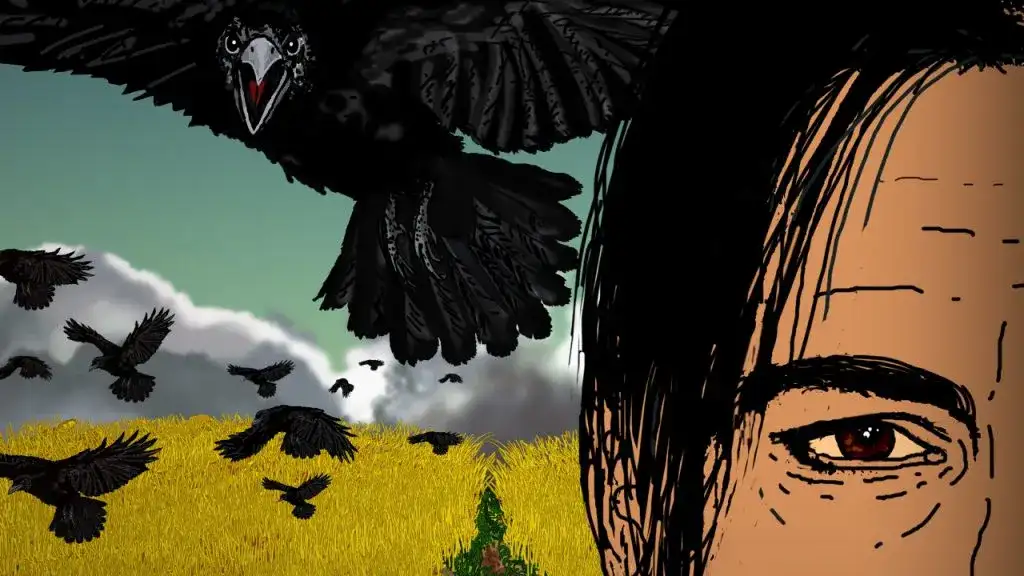
Sitges has past form in presenting the feature-length work of an animation auteur who labored long years to bring a passion project to life. Without any real financial support.
See Mad God, Phil Tippett ‘s stop-motion epic that was 20 years in the making. And slowly assembled in a garage with the assistance of volunteer film students.
Gregor only took a quarter of that immense production time to complete, but it’s an equally impressive undertaking. Especially considering that the chief creative force, Belgian animator Manu Gomez, largely worked alone.
It’s safe to assume then that Gomez had complete creative control. Making Gregor feel like a truly singular vision free of the studio notes that can rough down edges to ensure a more commercial product. A rarity in cinema nowadays.
This is obviously a good thing, but letting an animator run wild without restraint can sometimes mean that the story is an afterthought. Such as in Mad God, where any sort of narrative was kind of non-existent, with the focus squarely on creating an impressionistic nightmare through startling visuals.
But this is not the case in Gregor. At all. The narrative is surprisingly robust and engaging. And any extravagant visual flourishes are firmly in service of the story being told.
A sense of unease permeates Gregor from the opening scene, and the world that unfolds in the film is disturbing, to say the least. Like much of David Lynch‘s best work, the plot unfolds as a descent into a criminal and morally bankrupt underworld lurking just beneath the veneer of polite society.
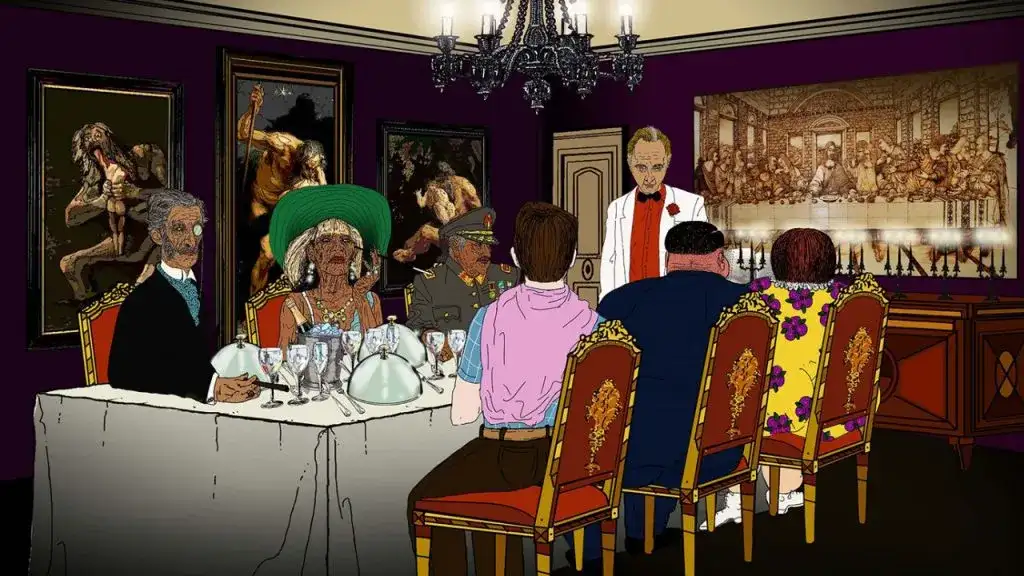
The grotesque design of many of the characters, as well as the general mood of the film, also strongly calls to mind Frank Miller’s Sin City. An influence that Gomez acknowledged when I asked about it in the post-screening Q&A!
Towards the end of Gregor, there’s a surprise twist that re-contextualizes the whole film. Though this plot turn is somewhat overused in cinema (Scorsese arguably did it best, but in which movie I won’t say!), here it works because it is sprung on us unannounced in a rather disorientating way.
The animation can at times feel perfunctory, and is admittedly a bit rough at times. But you have to remember that this is largely all the work of just one man. Which gives the film a certain leniency in this department.
The style is reminiscent of Cryptozoo, another unique and daring animated film presented at Sitges in the recent past. It’s not quite as polished as that earlier effort, but this arguably works in favor of the grimy story that unfolds in Gregor.
Perhaps what’s most fun in Gregor is that the film is littered with references to an eclectic range of other movies. Including from Disney’s Fantasia, Shock Corridor, The Shining, and Lynch’s Blue Velvet. Something I also admitted to spotting during the Q&A and which Gomez was glad to hear!
So if you’re a movie buff, you’re going to have a lot of fun noticing the little Easter eggs that Gomez has lovingly littered throughout the film.
Score: 8/10
Where to Watch Gregor
Discover where Gregor is available to stream, rent or buy across different platforms and countries.
What Happened to Doris?
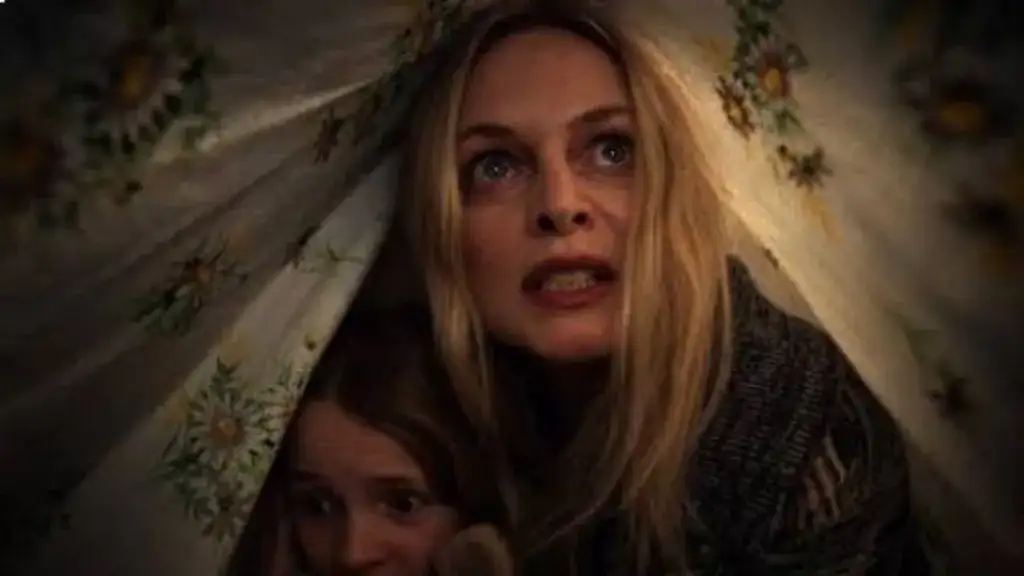
I sadly wasn’t able to catch either of the two films that feature one of my all-time favorite scream queens, Barbara Crampton, at this year’s edition. However, I was able to see her Suitable Flesh co-star, Heather Graham, in the, well, flesh.
The Boogie Nights actress is having somewhat of a horror renaissance at the moment, not only for headlining Joe Lynch’s 2023 slice of campy fun.
She also turned in a really game supporting performance in the wonderful They Will Kill You earlier this year. And unexpectedly popped up on TV just a few days ago in Mike Flanagan‘s Carrie series.
And now here she is at Sitges, greeting the audience in passable Spanish, to present her latest outing in the genre. A horror film purporting to tell the real story of the Doris Bither case, which was also the inspiration for 80s classic The Entity.
It’s impossible not to compare this version of the story to that earlier film, even though that was based on a highly fictionalized novel. But while it’s clear the filmmakers made pains to hew this tale closer to reality, even consulting Bither’s son, it’s still guilty of indulging in fantastical elements.
Still, compared to The Entity, What Happened to Doris? shows admirable restraint in some areas. Gone are the controversial, prolonged, and rather graphic attack sequences of the earlier film, replaced by fleeting glimpses of the assaults.
And it rather quickly introduces the parapsychologist characters, who, true to life, Doris overheard talking about their work in an occult bookshop. Meaning that most of the film unfolds from their perspective, and so, in theory, sticks to objective facts.
However, whereas where we didn’t get a good look at The Entity at all, here we most definitely do. And he’s sort of a half-hearted demon man that looks like he crawled out of the Insidious films.
He gets a big mid-film murder attempt on one of the parapsychologists (which definitely didn’t happen). And a rather cheesy, explosive sort-of-defeat in the film’s climax, thanks to a magical children’s toy.
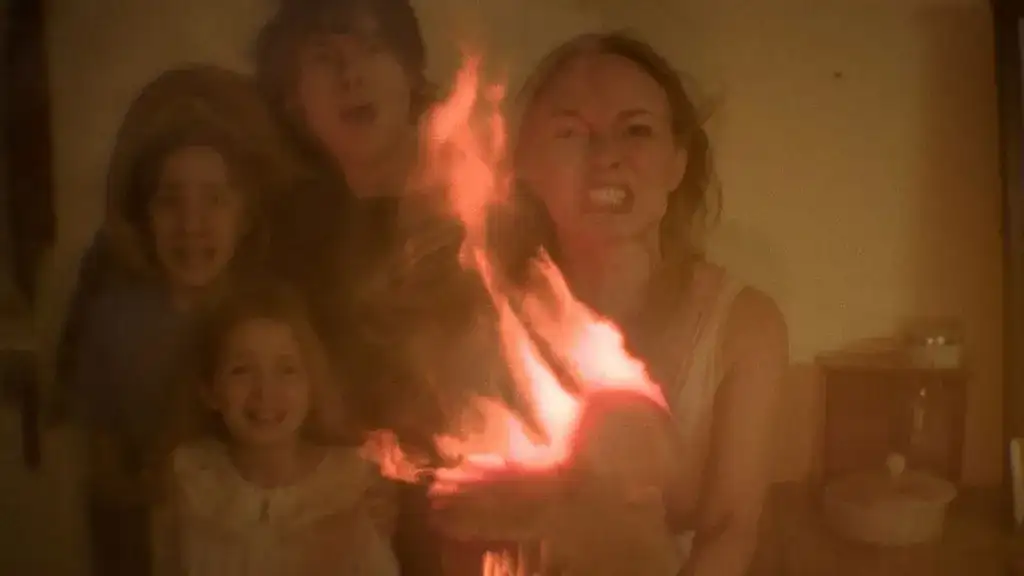
The film also entirely sidesteps the psychological examination so prominently featured in The Entity. As Doris pretty quickly refuses to go down that route. But while this is a logical move to distinguish the movie from its forebear, it means that Graham doesn’t get as much depth to explore as Barbara Hershey did.
It also ignores some of the more interesting facts of the real-life case. Like the fact the family were living in a dilapidated, condemned property. Which arguably would have amped up the drama.
There are also too many supporting characters competing for attention, so none are really fleshed out as much as they could be. While Doris’ combative relationship with her eldest son is an interesting addition, the rest of the kids get scant screen time and barely register.
Same goes for much of the expanded team of investigators. Although it beefs up the role of the head of the parapsychology department, played by Mimi Rogers, into an empathetic Elise Rainier-like figure who engages with Doris on a personal level. And Rogers is admittedly a warm and welcome presence.
On the plus side, What Happened to Doris? definitely nails the period setting (including lots of smoking!) But we really need to stop using Donovan’s “Hurdy Gurdy Man” to close out 70s-set films: no-one is going to match David Fincher’s use of the track in Zodiac!
And I have to admit that the screening I attended was very fun. The film has plenty of jump scares, and generated lots of shrieks and then laughs from the audience.
So if you love films like Insidious and The Conjuring, I’d recommend it. And advise you to see it on a big screen surrounded by other people!
Score: 6/10
Where to Watch What Happened to Doris?
Discover where What Happened to Doris? is available to stream, rent or buy across different platforms and countries.
We're sorry, no streams available for What Happened to Doris?.
No Rest for the Wicked
Just the other day I was thinking about my 2022 review of the film B&B. In which I expressed my excitement to watch a queer thriller, as genre films that tackle LGTBQ themes were still quite rare.
Fast-forward four years, and to say this is no longer the case is an understatement. Queer horror has truly exploded in 2026, and I’ve actually found it hard to keep up with the number of offerings.
There’s been Teenage Sex and Death at Camp Miasma, Penny Lane is Dead, Leviticus, and Corpus, all also screening at Sitges this year. And No Rest for the Wicked.
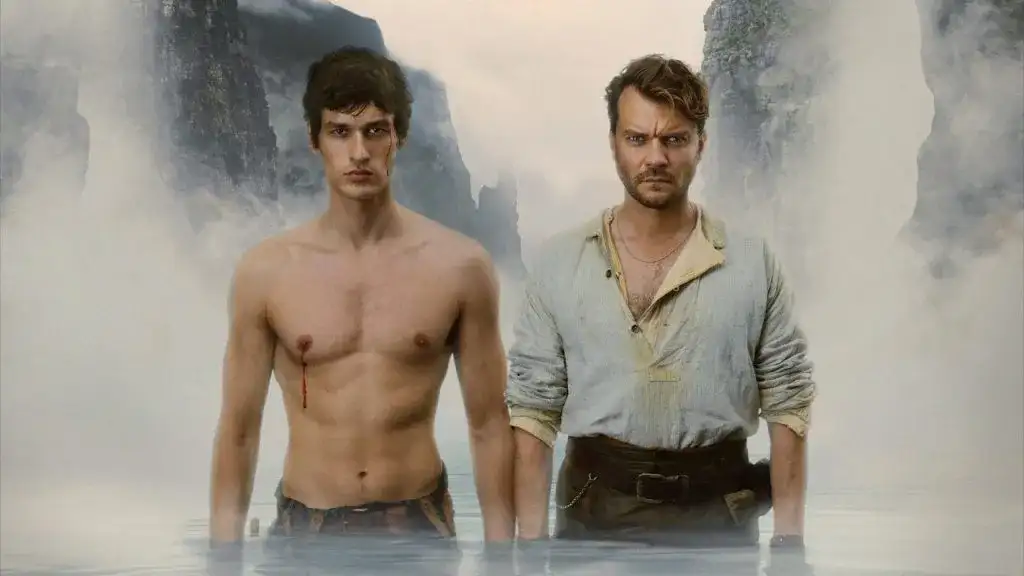
The only thing I knew about No Rest for the Wicked before going in was that it was a period film, concerning the relationship between a sexy fisherman and a “rugged whaler,” played by Borgen star Pilou Asbæk. And that there was some sort of supernatural element.
I think this is the best approach. As knowing too much more would spoil the experience of discovering the film’s many quiet surprises for yourself.
In his introduction to the film, director Kasper Kalle highlighted the fact that it’s loosely based on a novel written by openly gay sexologist Karl Heinrich Ulrichs all the way back in 1884. One of the very first to treat homosexual love in an emphatic, respectful way.
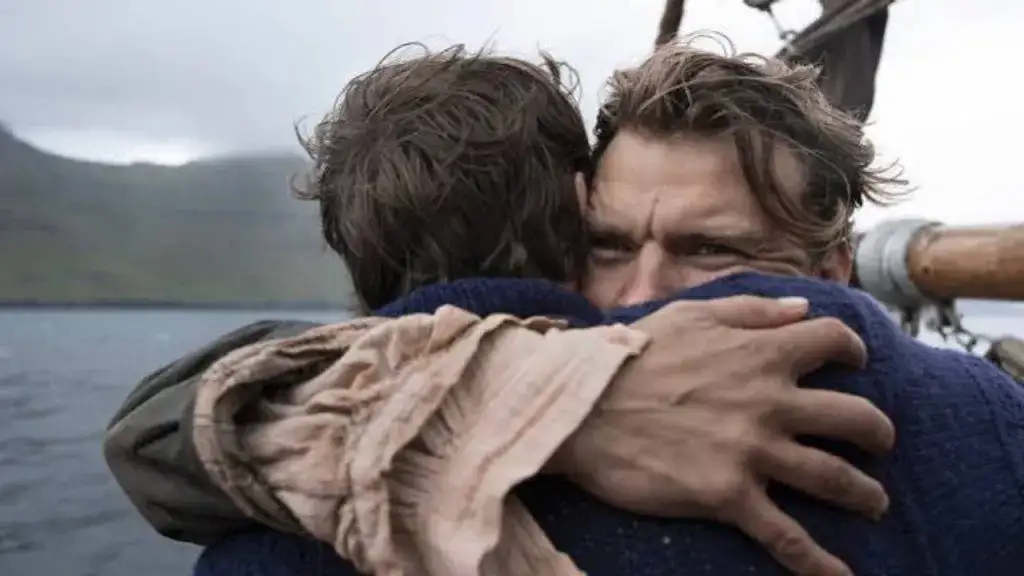
He also pointed out the overwhelming influence of the film’s filming location, the remote Faroe islands. A place that is both undeniably beautiful and deadly, due to the strong swells and rocky outcrops around the coasts that have resulted in innumerable shipwrecks.
As befitting a location so well acquainted with death, he noted that Faroese culture is also deeply steeped in unique myths and legends. Which pleasingly make this story a supernatural tale you probably have never quite seen before.
No Rest for the Wicked is also incredibly atmospheric and spooky, making good use of fog-shrouded environs to generate suspense in couple of stand-out sequences. The period details and music (though there is little apart from diagetic folk songs) also help to make it an incredibly immersive experience.
For a film that also largely takes place outdoors, across the rugged coasts and sweeping plains of the islands, it also feels unbearably claustrophobic at times.
This effect is largely achieved by the intense focus Kalle puts on the characters at the heart of the story. Making it feel like a very personal and intimate story.
The film really hinges around a trio of excellent performances, by Asbæk and Egor Venned as the star-crossed lovers, but also by Faroese actress Sofia Nolsøe as the younger man’s mother. All three get vividly defined, conflicted characters to work with, and make unforgettable impressions.
No Rest for the Wicked is definitely destined to be a classic of folk horror. And has one of the most satisfying and thought-provoking endings of any horror film you’ll see this year.
Score: 10/10
Where to Watch No Rest for the Wicked
Discover where No Rest for the Wicked is available to stream, rent or buy across different platforms and countries.
DreamQuil
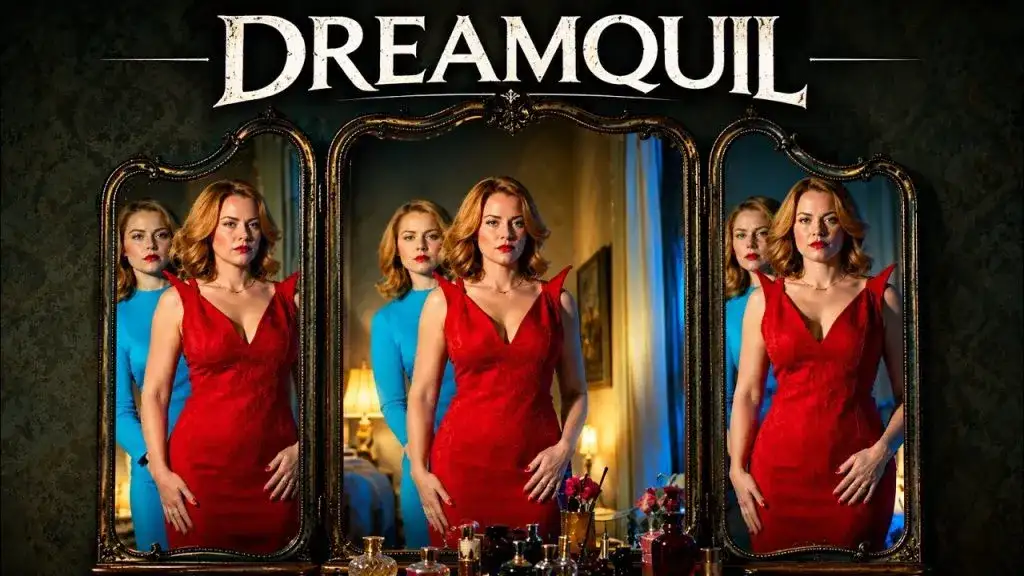
I saw sci-fi thriller DreamQuil purely by chance: I was waiting to see if I could get into an another film last minute when a woman randomly offered me a free spare ticket for the screening. Taking it as a sign, I happily accepted.
And I’m glad I did, as I soon realized that I’d heard about DreamQuil before and had actually wanted to see it. But I didn’t even know it was playing at the festival!
Something that becomes clear pretty soon into DreamQuil is that it wouldn’t exist without Black Mirror. As the film’s plot unfolds as a mishmash of ideas highly reminiscent of some of that classic anthology series’ standout episodes.
And it doesn’t really have much to say about the dangers of technology that wasn’t covered in the Black Mirror episodes it bears most resemblance to. Or in The Stepford Wives, which, to its credit, the film actually calls out at one point.
However, the film is a worthwhile watch for two outstanding elements: the lush production design and cinematography, and the excellent cast. Headed by Elizabeth Banks and John C. Reilly .

Banks already proved she could deliver serious comedic goods amidst fantastical events way back in Slither (2006). And then in The Hunger Games movies as the iconic Effie Trinket.
She unleashes some of that same expert timing here. But she also gets to show considerable range in two very different dual roles.
There are also some welcome supporting turns, including from absolute legend Juliette Lewis as an eerily chirpy nurse. And the always appealing Sofia Boutella as a vivacious best friend.
But perhaps DreamQuil‘s biggest assett is the look and the feel of the film. It takes place in an undefined future where polluted air has made it impossible for city-dwellers to venture outside without masks. And the scenes of the dusty outside world (largely achieved through miniature sets) look suitably nightmarish.
But it’s in the interior scenes that DreamQuil really pops. Inside of their fancy penthouse, and despite the presence of some futuristic gizmos, Banks and Reilly are firmly stuck in the past.
The decor, pastel-colored walls, costuming and hair-styling, along with the vibrant Technicolor photography, combine to make much of DreamQuill feel like a Douglas Sirk melodrama straight out of the 1950s.
Visually at least, it’s a carefully crafted, beautiful film, art-directed to the max. And seeing it made me feel slightly better about not being able to catch The Love Witch director Anna Biller’s new film The Face of Horror at the festival!
Score: 6.5/10
Where to Watch DreamQuil
Discover where DreamQuil is available to stream, rent or buy across different platforms and countries.
Buddy
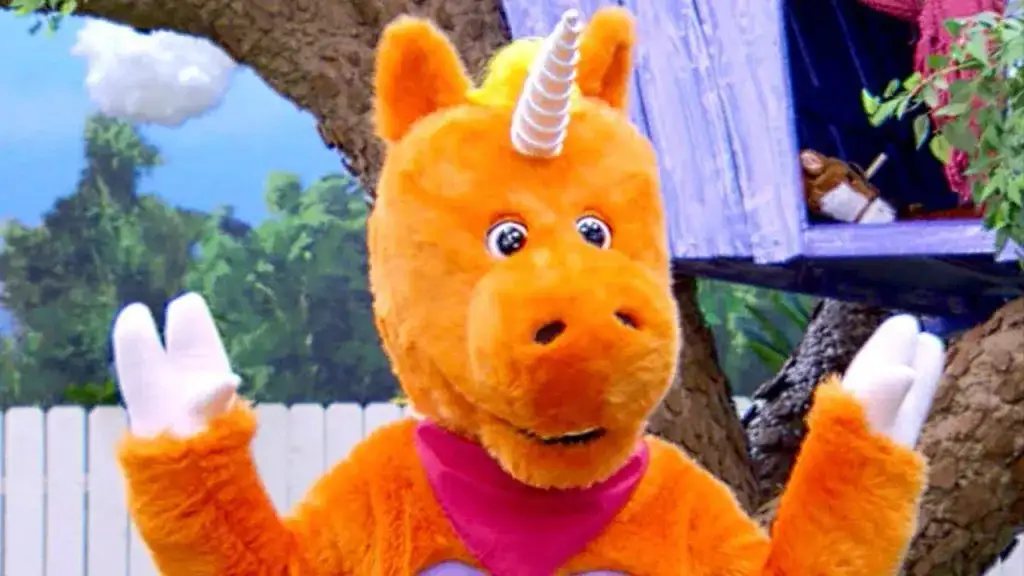
Buddy was released in the US in August, but we’re still waiting for it in Spain. And it doesn’t hit cinemas until mid November (seriously, distribution is f****d!)
And I’d been dying to see it, thinking that the concept is pretty genius. So I decided to make an exception to my rule of avoiding soon-to-be-released titles for Buddy.
My excitement for Buddy was warranted: I really enjoyed and appreciated this film. I’d deliberately avoided watching the trailers beforehand, so pretty much everything was a surprise to me, and recommend this approach!
All is knew is that it was about a children’s’ TV character who turns murderous. This idea has been done before, such as in The Banana Splits Movie (2019).
But where that film was content with being a bog-standard slasher, Buddy is something far more inventive. And fully leans into subverting the safe, familiar world of a kids’ TV series into something unsettling and nightmarish.
The movie begins presented as a series of episodes of a Barney-esque show from the 90s. And it absolutely nails the aesthetic.
Everything is bight and colorful and artificial, everything from the mailbox to the trash can has eyes and can talk, and the acting of the kids is perky but somewhat stilted. Also true to this period of children’s programming, everyone breaks into an educational song every few minutes.
Then there’s the titular character. When you think of casting the voice of a bright orange unicorn, who by all probability is likely really a disgruntled man in a suit, Patton Oswald might automatically spring to mind. But no, while Oswald is indeed in the movie, he’s instead the voice of Strappy, an anthropomorphic backpack.
To play Buddy himself, the filmmakers enlisted Keegan-Michael Key, who proves to be the perfect fit. He absolutely nails the Barney-esque voice of forced joviality, and slips it into something truly terrifying when the character takes a turn for the sinister.
The fantastic casting also extends to the child performers. Particularly Delaney Quinn and Caleb Williams, who are both great at establishing the kind of personalities you would find on a show like this. Before turning them into fearful but brave fighters.
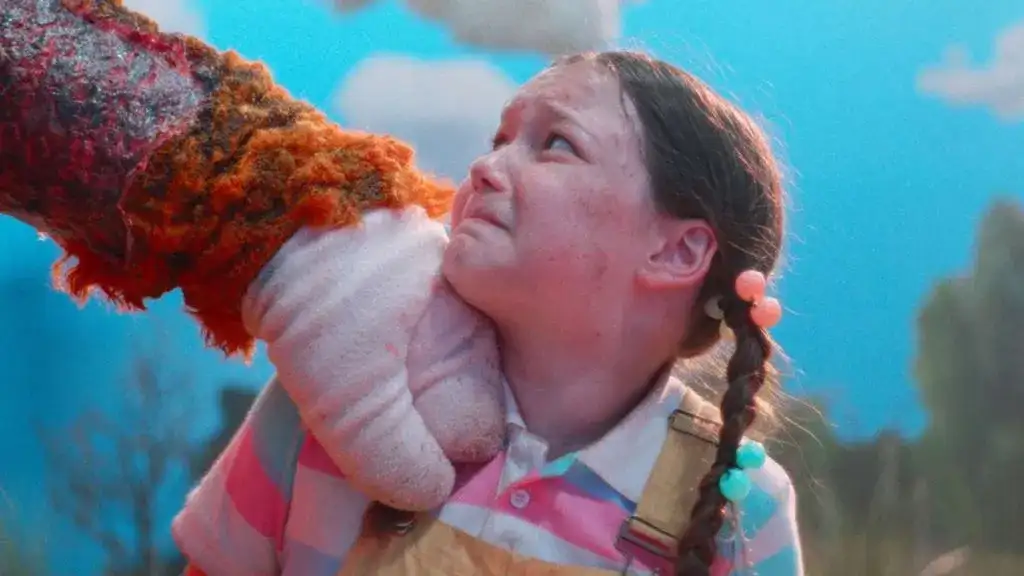
What makes Buddy special though is the careful attention to world-building. And the fantastic series of what-if questions it sets up and then majorly pays off.
What if those chirpy kids were actually trapped in that whimsical world and forced to play along? What if the cheery song that closes every episode actually had a sinister purpose? What if this wasn’t actually a kids’ TV show, but some kind of dark dimension?
For much of the runtime, if you want to read into it, Buddy actually plays like a thriller about overcoming domestic abuse. As the children are forced to pretend like everything is OK when they know it very much isn’t, that the chief authority figure in their lives actually means them harm. And they then have to figure out a way to discreetly get out of the situation to safety.
But that’s easier said than done, because it’s not entirely clear where these kids actually are. Through ingeniously using different aspect ratios and film stock, it’s clear that there’s a line between the TV land of Buddy’s show and the real world.
Once the kids manage to escape over the garden wall and leave Buddy’s “park”, we get the tantalizing sense that this isn’t just some set in a studio that these kids simply walk off of at the end of the episode. But in other respects, it’s exactly that, with (gorgeously) painted backdrops, and greenery that looks like its made out of plastic and papier-mâché.
The sequences with the kids attempting to navigate and then escape Buddy’s new-found murderous tendencies are definitely the best in the film. With some truly shocking injuries and deaths that hid hard because of the pastel-colored surroundings.
A subplot set in the “real” world, introduced late in the fim and protagonized by Cristin Milioti, is not nearly as engaging. However, it adds some depth and explanation to Buddy’s powers, and also deepens the mood of unease.
And the final act of the film is a blast, using both a well-realized monster and creepy liminal spaces (very much in vogue this year after Backrooms) to thrilling effect.
Score: 9/10
Seen any of the films I managed to catch at Sitges and agree/ disagree? Or is there one you can’t wait to see for yourself? Let me know on Instagram!
Where to Watch Buddy
Discover where Buddy is available to stream, rent or buy across different platforms and countries.