
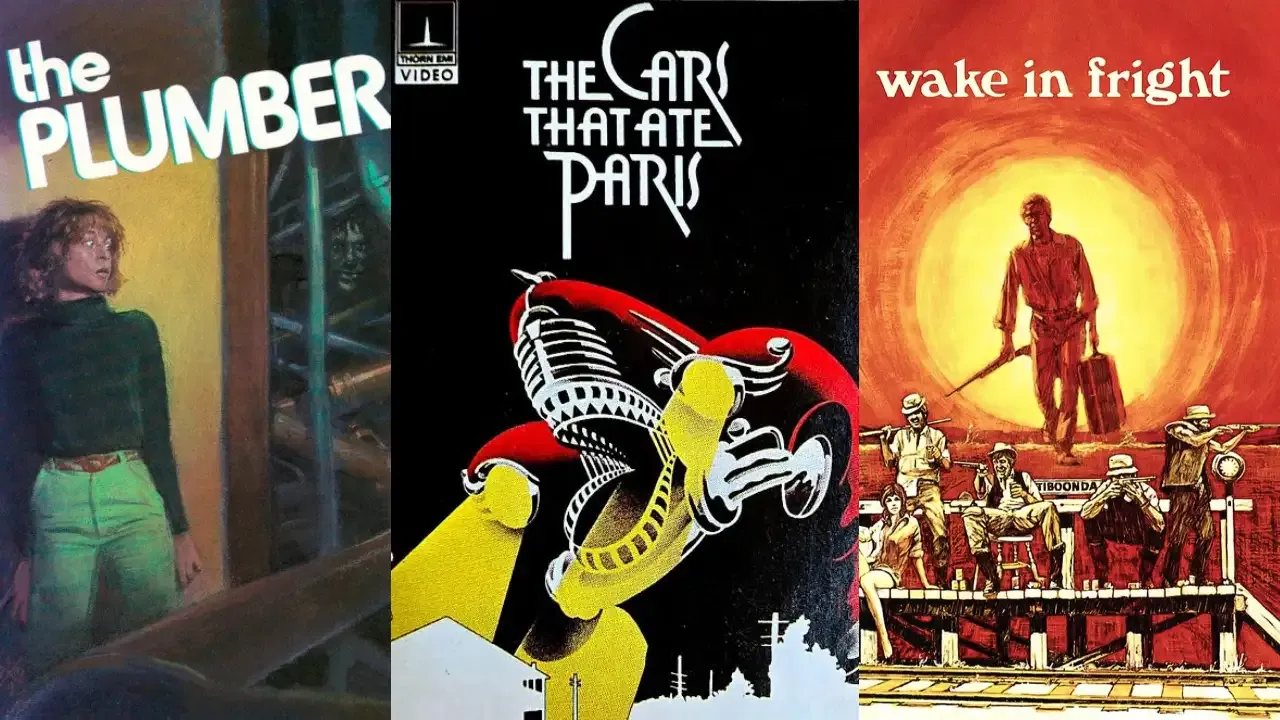
Where to Watch Best 70s “Ozploitation” Horror/Thrillers
Discover where Best 70s “Ozploitation” Horror/Thrillers is available to stream, rent or buy across different platforms and countries.
We're sorry, no streams available for Best 70s “Ozploitation” Horror/Thrillers.
Why I made the list:
While writing my review of Death in Brunswick (1990), I realized it was considered part of the wave of Australian films known as “Ozploitation”.
These are low-budget exploitation flicks produced Down Under that cover a range of genres. But mostly horror, thriller, action, sexploitation, and comedy.
This Aussie cinematic movement started in the 1970s, after the introduction of the R rating in 1971. And is considered a smaller wave within the Australian New Wave of films. Which are generally a bit more high-brow and arty than “Ozploitation”!
The term was actually coined by none other than Quentin Tarantino, who was a longtime “Ozploitation” fan. And has frequently praised many of these films as being highly influential on his own.
Having long had many of these films on my watchlist, it was finally time to take some of them off!
I decided to start by focusing on the best horror/thrillers produced during the beginning of “Ozploitation” films, the 70s. And have also included one “dishonorable mention!”
Note: I “cheated” a bit by skipping ahead to watch the brilliant Next of Kin (1982). And wrote a full review of it, if you’re interested in checking it out after this!
And I purposefully did not include the most well-known 70s films that fall into the “Ozploitation” wave. Like Mad Max (1979), as enough ink has been spilled on it!
Walkabout (1971)

The film that really kicked off the Australian New Wave (and can also be considered “Ozploitation” because of its thriller elements) was, ironically, directed by a Brit. And also adapted by an English screenwriter from a novel by an English writer.
But well, the director happens to be the brilliant Nicholas Roeg (Don’t Look Now, The Witches). So I doubt anybody was complaining!
In only his second directorial effort, after 1970’s Mick Jagger-starring Performance, Roeg proves himself a master of evocative visuals, startling juxtaposition, and thought-provoking subtext.
Also serving as cinematographer, he creates a vivid portrait of the Australian Outback, teeming with life. That has perhaps never been matched.
The (on the surface thin) story concerns a pair of posh English schoolchildren who are stranded in the desert and left to fend for themselves. Before encountering a teenage Aboriginal boy (the astonishing David Gulpilil) on a “walkabout” who helps them survive in the wilderness.
But, Roeg being Roeg, there are a ton of themes buried under the surface. Which he conveys with vivid imagery and ingenious editing.
The filmmakers also made some changes to the source material to underscore the themes they wanted to explore. For example, the children are not left stranded by a plane crash as in the novel, but by a harrowing attempted family annihilation by their father.
And the film shows the closer they get back to civilization, the more danger they are in of being consumed by the hostile, self-destructive, and superficial world of Western society. Which mindlessly destroys the natural sphere that they have come to find so much joy in.
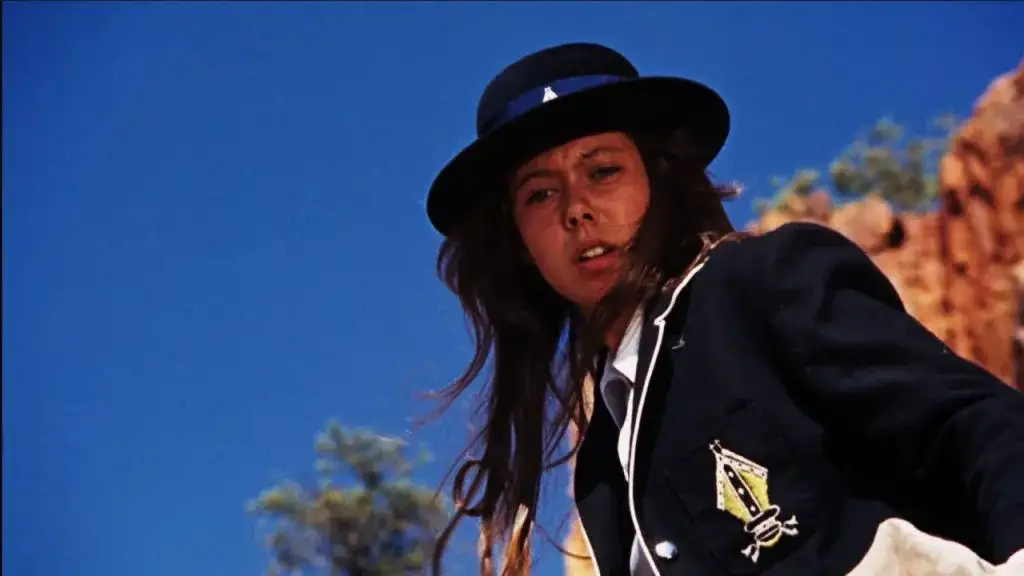
As in I Start Counting (1969), future Logan’s Run and American Werewolf in London star Jenny Agutter gives a beautifully naturalistic performance as the teenage girl. Who, although headstrong, is fearful of her burgeoning sexuality.
Though the film required some nudity from the young actress, it never feels exploitative. And Agutter herself has said that though she was initially self-conscious, she trusted Roeg’s intention and that “there was a simplicity and beauty to it”.
The late Roger Ebert, hands down my favorite ever critic of cinema, called Walkabout “one of the great films.” Writer/director Alex Garland (28 Days Later, Dredd, Annihilation) is also a huge admirer.
It’s a beautiful, dreamy, troubling piece of art, nothing short of a masterpiece. That I think should be on everyone’s cinematic bucket list.
Score: 10/10
Where to Watch Walkabout (1971)
Discover where Walkabout (1971) is available to stream, rent or buy across different platforms and countries.
Wake in Fright (1971)
Wake in Fright is also considered a classic of both “Ozploitation” and Australian New Wave (and also directed by a non-Australian). It had been on my radar for quite some time but I had always put off watching it because it sounded incredibly harrowing.
And having now seen it, I can testify that it is, and then some. Like similarly-themed, heavy addiction movies such as Christiane F. (1981) and Requiem for a Dream (2000), I feel like it’s an important film everyone should watch at least once. But then maybe not again!
Wake in Fright (re-named Outback for international release) is adapted from the novel of the same name by Kenneth Cook. It tells the disturbing, disorientating story of a well-educated teacher who becomes trapped in the fictional desert “city” of Bundanyabba.
But it’s the circumstances in which he becomes stuck in what locals call “The Yabba” that are particularly troubling. Initially, John (Gary Bond) is only supposed to stay one night in the dusty town, a stopover on his way to visit his girlfriend in Sydney.
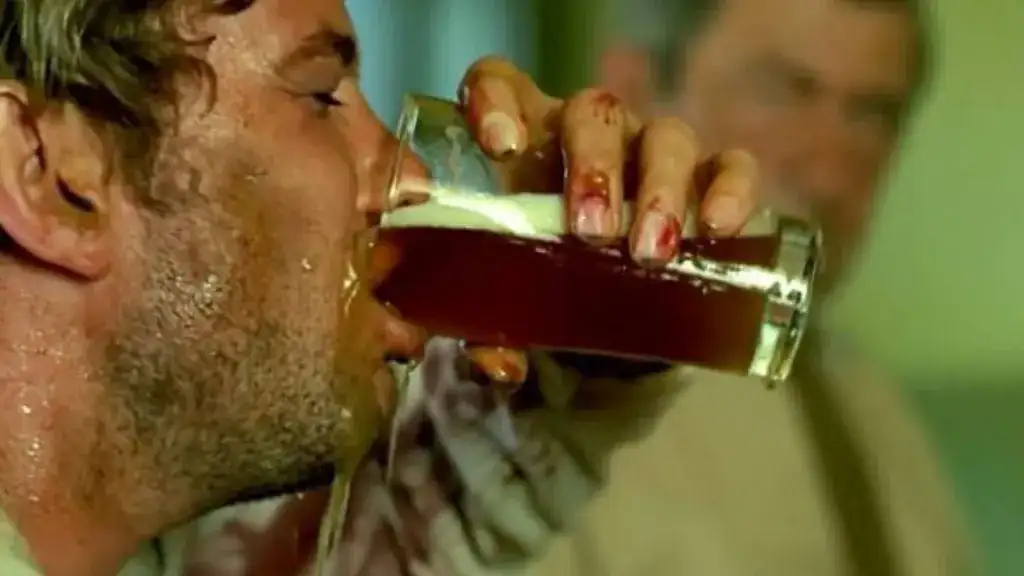
But he decides to venture out to a local pub, where he grabs a pint and attempts to mingle. He befriends an amiable policeman who pushes him into drinking more, before introducing him to an illegal gambling ring held in the back of a restaurant.
While initially hesitant, and after a lot more alcohol, John gets excited and decides to participate in the gambling. And wakes up horribly hungover the next morning to find that he has lost every single penny of his money. And he’s missed his flight.
However, this is not a problem, according to the dubious policeman, as folks in “The Yabba” take care of their “own”. The solution is simply to keep drinking. And if you have no money, don’t worry: it’s on the house.
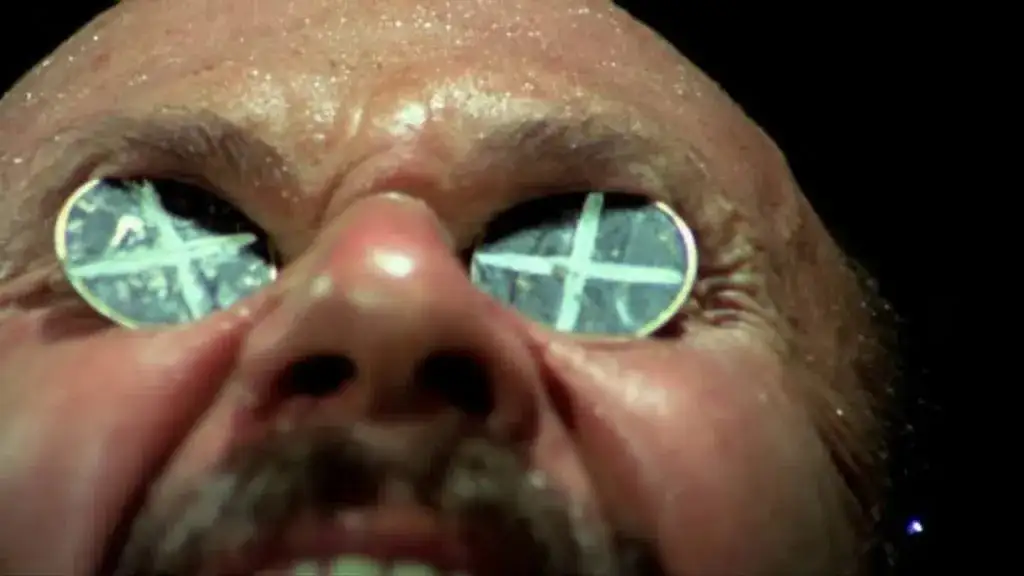
Soon John, who was previously shown to control his drinking, finds himself spiraling into a harrowing cycle of alcoholism. And increasingly disturbing immoral behavior, which only gets worse when he befriends the local “Doc”.
This insane character (future Halloween franchise star Donald Pleasance) was once a practicing physician in Sydney, until his alcoholism took hold. And he found himself stuck in “The Yabba”, much like John.
He lives in absolute squalor and for his next drink, but claims to be happy. And persuades John to come on a kangaroo hunt with him and some mates (including Australian acting legend Jack Thompson). Blind drunk, of course.
This leads to the most disturbing sequence in the film, which caused walkouts at its Cannes screening. In it, the heavily inebriated hunters chase down the animals in the dark with vicious dogs and vehicles mounted with floodlights, the kangaroos helplessly caught in the beams.
Hooting and hollering with glee, they let loose a barrage of gunfire at the animals, causing bloody destruction. And the brutal results are shown in sickening detail.
Horrifically, we’re actually seeing footage of a real kangaroo hunt (and the real hunters were also all very drunk). And all the death and inhumane treatment is very real.
However, Canadian director Ted Kotcheff staunchly defended his decision to include the graphic footage. Kotcheff, who was a vegetarian, thought that it was important to make the public aware of this barbaric nightly carnage.
What’s more, he claimed he “used only the mildest of the documentary footage.” But it’s still horrific and not necessarily something I needed to see.
Another problem that I have with the film is that the final straw that pushes the protagonist to get out of this destructive loop isn’t the barbaric kangaroo hunt, but an implied homosexual act. John is shown as more disturbed by the prospect of gay sex than the mindless slaughter of animals, which is pretty problematic.
However, this quibble aside, Wake in Fright is very effective as a truly scary glimpse into the chaos and degradation that excessive alcohol consumption can cause. Which I have experienced first-hand.
Gripping and nauseating from start to end, it’s a damning indictment of booze culture. That continues in many countries worldwide, not just Australia, to this day.
There is also a brilliant (but very cruel) twist near the end which makes the film incredibly memorable. In my opinion, it should be shown to teens in high schools to put them off boozing!
Score: 9/10 (would be a 10 if not for the punishing kangaroo sequence!)
Where to Watch Wake in Fright (1971)
Discover where Wake in Fright (1971) is available to stream, rent or buy across different platforms and countries.
The Cars That Ate Paris (1974)
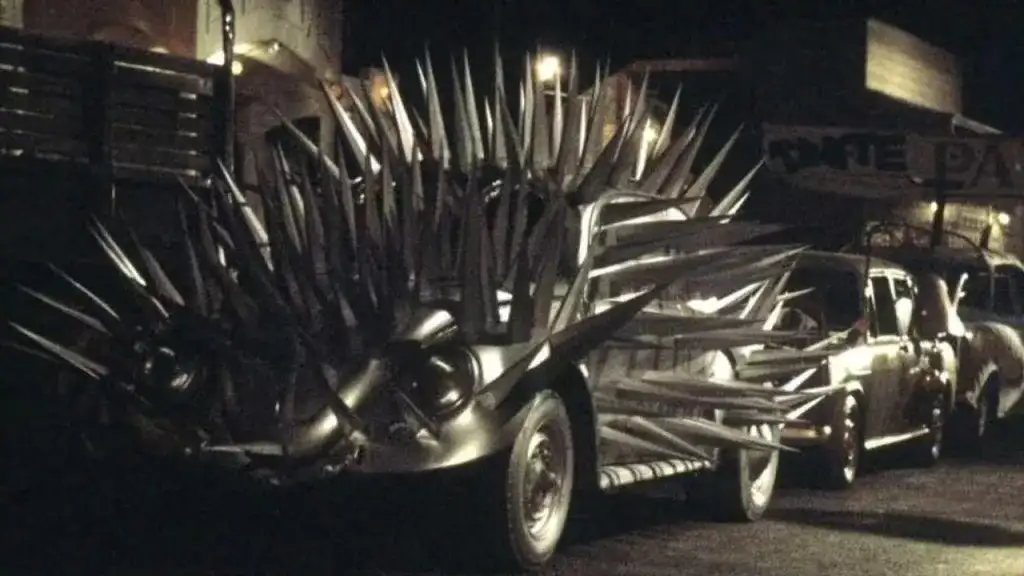
Considered to be one of the first of many Australian “car” movies, The Cars That Ate Paris was a major influence on George Miller’s Mad Max, definitely the most well-known “Ozploitation” movie.
For his theatrical feature debut, future The Truman Show director Peter Weir came up with the idea for this truly bizarre but brilliant film while on vacation in Europe. Where he saw that “road signs on the main French roads diverted him into what he perceived as strange little villages.”
These “strange little villages” would eventually lead him to develop a story around the fictional isolated town of Paris in the Australian Outback. Where a backwards and dangerous society has been forming.
Weir conjures a palpable air of dread and menace from the moment we enter Paris through the eyes of outsider protagonist Arthur (Terry Camilleri), who survives a car crash on the way into town.
And we soon start to discover its secret: the settlement’s entire society and economy seems to be based around benefitting from wrecked vehicles.
The townsfolk, led by the terrifyingly resolute mayor, deliberately cause accidents on the rickety roads into Paris. In order to salvage and barter with the parts they scavenge.
Any survivors are sent to a sinister psychiatric hospital where a dubious doctor performs terrible experiments. However, some exceptions are made, including for Authur, who the mayor mysteriously announces is “one of us”, before he starts indoctrinating him into the machinations of the town.
However, this insidious adoration of vehicular mayhem has gotten out of hand: the elders have lost control over the young men. Who have taken to constructing menacing, battle-ready cars to cause destruction inside the town itself.
Thus, as in many of Weir’s films, a society is shown as responsible for its own downfall. And what a spectacular downfall it proves to be! I still want to know how many cars they wrecked during production, but can’t find the number online!
Interestingly, The Cars That Ate Paris was one of Stanley Kubrick’s favorite films. And it’s not hard to see why: the film is bat-shit crazy but also mesmerizing. And has lots to say about the dangers of unchallenged group-think.
Also, the cult-like mentality of the town’s residents gives serious The Wicker Man vibes, a major compliment. Just replace the worship of Pagan gods with that of automobile accidents.
If the movie isn’t wacky enough for you, you can always hear stories about the unlikely stage musical adaptation!
Score: 8/10
Where to Watch The Cars That Ate Paris (1974)
Discover where The Cars That Ate Paris (1974) is available to stream, rent or buy across different platforms and countries.
The Last Wave (1977)
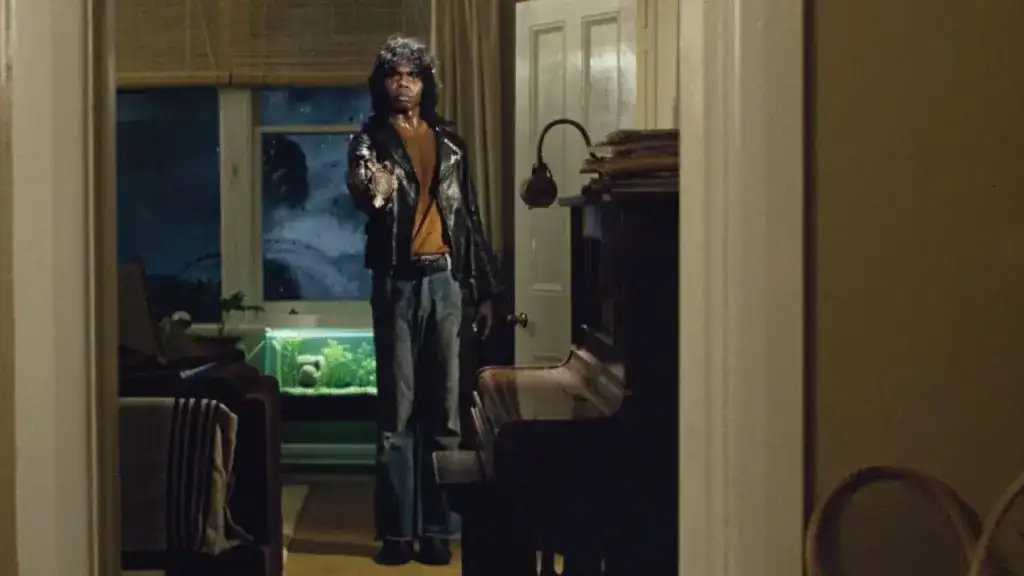
Deeply unsettling is the best way to describe Peter Weir’s next effort to make this list (his 1975 classic Picnic at Hanging Rock is considered purely Australian New Wave and not “Ozploitation”.)
The Last Wave kind of straddles both cinematic movements: it’s quite an artsy and philosophical film, but there’s also a potential murder to solve and plenty of horror-infused sequences.
It starts as a fairly grounded story about a white lawyer being hired to represent some Aboriginal murder suspects (including Walkabout‘s Gulpilil) in court. But it soon turns into a surreal psychological thriller involving prophecies and mystical goings-on that feels positively apocalyptic.
The film is deeply concerned with environmental collapse and depicts several weather-related calamities, which pushes it close to eco-horror. This is reinforced by some truly disturbing, award-winning sound design, which makes it seem like Mother Nature is the true villain.
But The Last Wave also heavily implies there’s another, equally elusive and powerful antagonist lurking in this film. The effects of colonization on native peoples.
The film doesn’t shy away from showing the disastrous consequences of oppression of the Aboriginal people. Including alcoholism and vagrancy.
This eventually ties into the strong vein of fascinating mysticism that runs through the whole film. But I won’t say too much more, as you should discover protagonist David (queer actor Richard Chamberlain)’s journey of self-reckoning for yourself!
Score: 8/10
Where to Watch The Last Wave (1977)
Discover where The Last Wave (1977) is available to stream, rent or buy across different platforms and countries.
Patrick (1978)
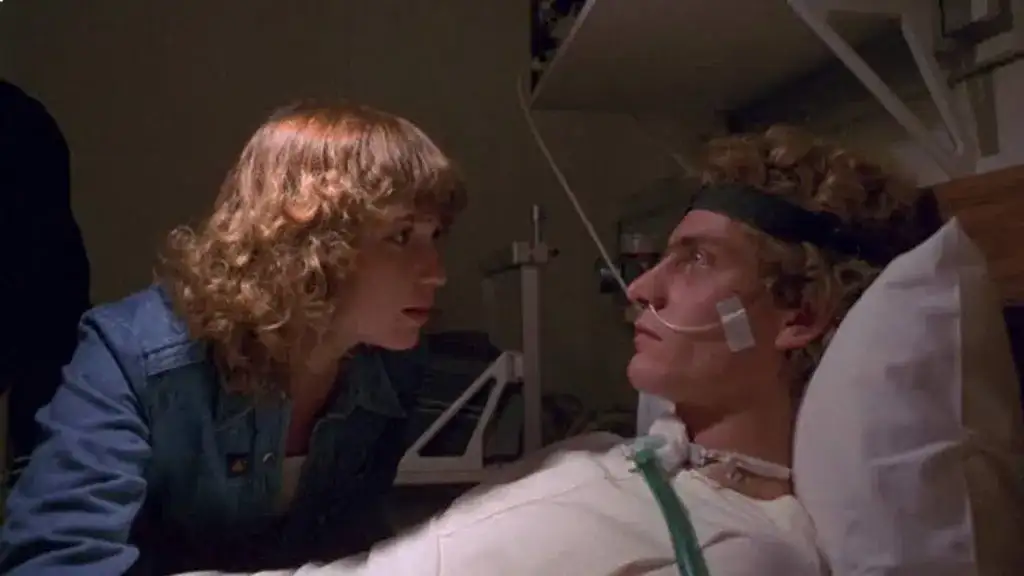
“Ozploitation” took its first steps into overt supernatural horror territory with Richard Franklin’s Patrick, the story of a comatose patient who develops dangerous telekinetic abilities and uses them to terrorize his nurse.
The film was discovered by a young Tarantino, who has cited Patrick as influential on his own work. Most notably, the singular way the title character spits, which he paid homage to with Uma Thurman in Kill Bill.
From the basic plot description, Patrick would seem to be an attempt to cash in on the success of Carrie a couple of years earlier. However, screenwriter Everett de Roche had apparently been working on the script for several years before the film made it to the screen.
Nevertheless, there are definitely some similarities to Carrie that I feel like might have been added in as a response to that film. Including the sound design whenever psychic abilities are in play. And a last-minute jump scare in the closing minutes that mirrors Amy Irving’s ordeal in the 1976 movie.
And composer Brian May (best known for the first two Mad Max films) undeniably evokes the score of Brian de Palma’s classic film in some scenes. Particularly those involving protagonist Kathy simply going about her business.
Curiously, I found out that the score was replaced by one composed by none other than Goblin (Suspiria) when the film was released in Italy, as Italian producers were unimpressed with the original music. Goblin’s version of the score is available on YouTube if you’re curious!
It’s genuinely fascinating that so many movies about psychic abilities appeared simultaneously in the 70s (Carrie, The Last Wave, this film, The Fury, The Medusa Touch…) Must have been something in the air!
Patrick is definitely one of the more solid entries in this weird psychic horror subgenre. The script is overall very strong and interesting, and mostly ratchets up the tension as the film progresses.
Although the third act is weighed down a bit by one too many scenes of Kathy talking on the phone as she investigates Patrick’s doings. That probably could have been cut for a tighter film.
Also, Patrick is not really very inspired visually: it’s a bit flat-looking for a film set in a Gothic hospital. Except for a sequence where Kathy sneaks a neuroscientist acquaintance in to get an outside opinion on Patrick (but this heavily features strobe lighting, so watch out if you’re sensitive to that!)
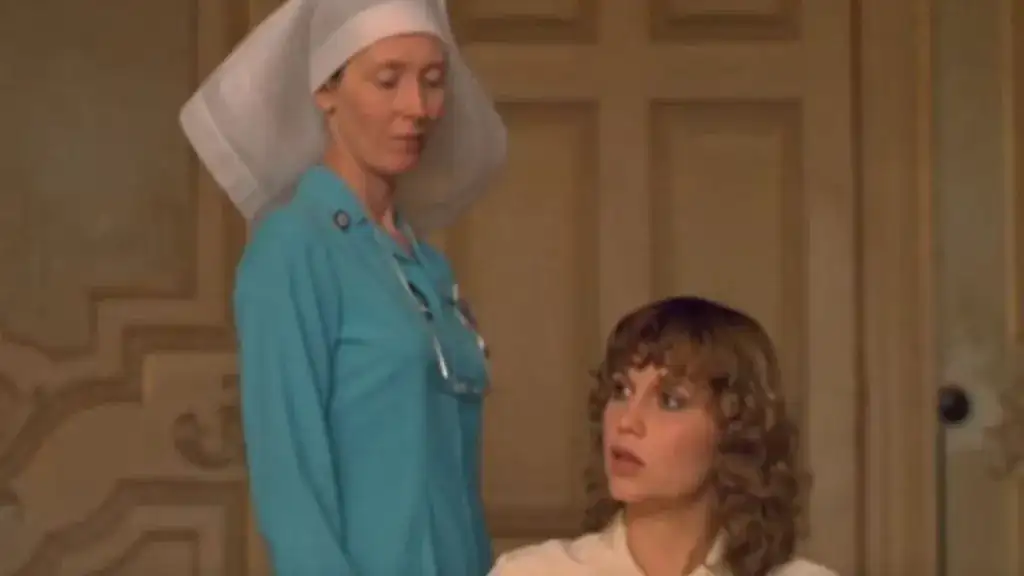
A big positive is that the character of Kathy is well-written and pretty strong. And British actress Susan Penhaligon is immensely likeable in the role. She comes across as kind and open-minded, but also assertive and strong-willed.
Unlike most heroines in films like this, who run screaming for the exits at the first sign of the supernatural, she takes all the phenomena in stride and is largely unfazed. And she is admirably no-nonsense in the film’s climax.
Elsewhere in the cast, Julia Blake is immensely entertaining as the hospital’s harsh, jaded Matron Cassidy, who definitely gets some of the best lines. Particularly during Kathy’s job interview near the start of the film.
These include: “We’re not interested in restless housewives who will resign at the first sign of a soiled bedpan!” And “We tend to attract certain types. Lesbians, nymphomaniacs, enema specialists…”
Patrick got a remake in 2013. Starring Rachel Griffiths as Matron Cassidy, You’re Next’s Sharni Vinson as Kathy, and Charles Dance as Dr. Roget.
But by all accounts the remake is not very good, despite director Mark Hartley being a huge fan of the original. Which you should probably just watch instead!
Score: 6.5/10
Where to Watch Patrick (1978)
Discover where Patrick (1978) is available to stream, rent or buy across different platforms and countries.
The Plumber (1979)
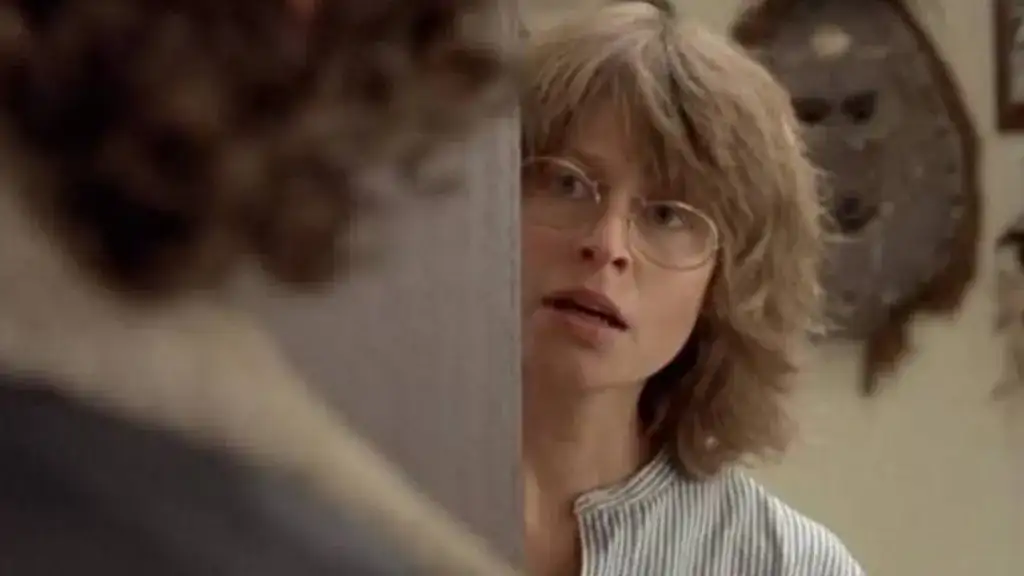
The Plumber marks the third time the prolific Peter Weir appears on this list. And it’s really the last of his movies that could be called “Ozploitation.”
He would move onto directing Australian war epic Gallipoli (1981), and then Hollywood studio films like The Year of Living Dangerously (1982) and Dead Poets Society (1989). So don’t expect to see him on my 80s list!
On the surface, The Plumber is a fairly simple home invasion thriller, as mild-mannered academic Jill (Judy Morris) is pestered and then eventually terrorized by unhinged tradesman Max (Ivar Kants). But, as could already be expected from Weir, who also co-wrote the screenplay, the film is full of subtlety and thematic depth.
As in The Last Wave, Weir explores issues like white and class privilege, and societal inequality having unexpected consequences. And the fragility of middle and upper-class security in a society with a disenchanted underclass.
Weir’s first genius idea, the first of many, was to have Jill and her husband Brian (Robert Coleby) be anthropologists. These are educated, level-headed people who have traveled widely and interacted with and sought to understand primitive tribes.
We meet Jill as she’s asking her husband what he thought of her manuscript about tribespeople in New Guinea. She ends up describing an encounter with a “sorcerer” who came into her tent and performed a tribal rite, getting into a deep trance.
And how to get him out of it, she flung a bowl of goat’s milk in his face. Which, along with the plot of the film, actually happened to a friend of Weir’s.
After Brian out goes to lecture, Jill attempts to work on her studies, but she’s interrupted by the arrival of the titular character. Puzzled and reluctant to let him in as they didn’t call a plumber, she relents after he assures her it’s just a routine check ordered by the campus authorities.
Max initially presents as cheerful and respectful but this facade begins to slip and his behavior becomes increasingly more disruptive and intrusive. He also makes no attempt to hide his contempt for academics and the massive chip he has on his shoulder about being “uneducated.”
At first, Jill is polite and indulges his diatribes while gently questioning his beliefs. Although she is careful not to come across as superior or judgemental.
However, she begins to lose her cool when Max apparently just keeps on discovering problems in their previously in-order bathroom, and begins tearing it to pieces. And his deliberate provocations become more menacing.
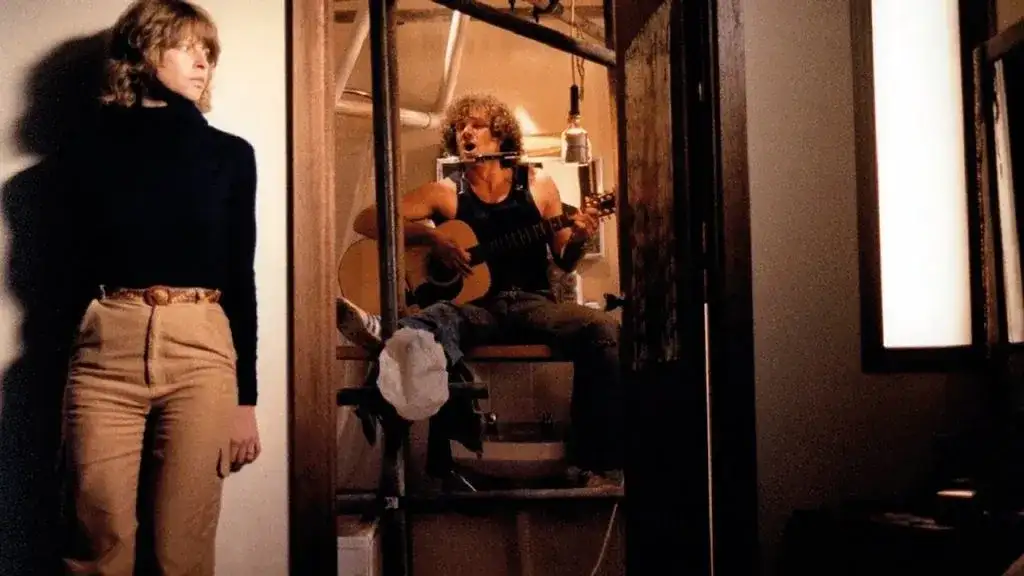
Unlike The Last Wave, the film has a playful, dark sense of humor that makes it more purely entertaining. Best exemplified in an awkward dinner party scene where Brian brings home some colleagues, and in the character of Max himself.
Max first comes across as a harmless bogan, who, although loud and obnoxious, is a regular working-class guy simply having a bit of fun while doing his job. But Weir and Kants gradually unveil sinister layers to Max, as well as some unexpected character quirks that make him an interesting and engaging villain.
Like Max Cady of Cape Fear fame, who feels like a major inspiration for this character, the titular plumber is smart enough to know that the most fear-inspiring terror doesn’t come from outright violence. But rather the subtle erosion of a person’s sense of well-being.
The threat of rape is alluded to a couple of times, most prominently by Max as a tasteless “joke”. But he doesn’t mean to actually physically harm Jill, simply gaslight and provoke her into nervous collapse.
By the end of the film, Jill finds herself considering ways out of the nightmare that the tolerant and kind-hearted woman we met at the start would never have imagined. So, Max has succeeded in his mission to mentally break Jill, but it backfires on him in a way that he didn’t see coming. Which is highly satisfying.
Taking place almost entirely within the confines of the small apartment (it would probably make for a good stageplay), The Plumber is unbearably claustrophobic. And expertly ratchets up the tension and sense of frustration and helplessness that Jill feels.
Score: 8/10
Where to Watch The Plumber (1979)
Discover where The Plumber (1979) is available to stream, rent or buy across different platforms and countries.
Dishonorable Mention: Snapshot (1979)
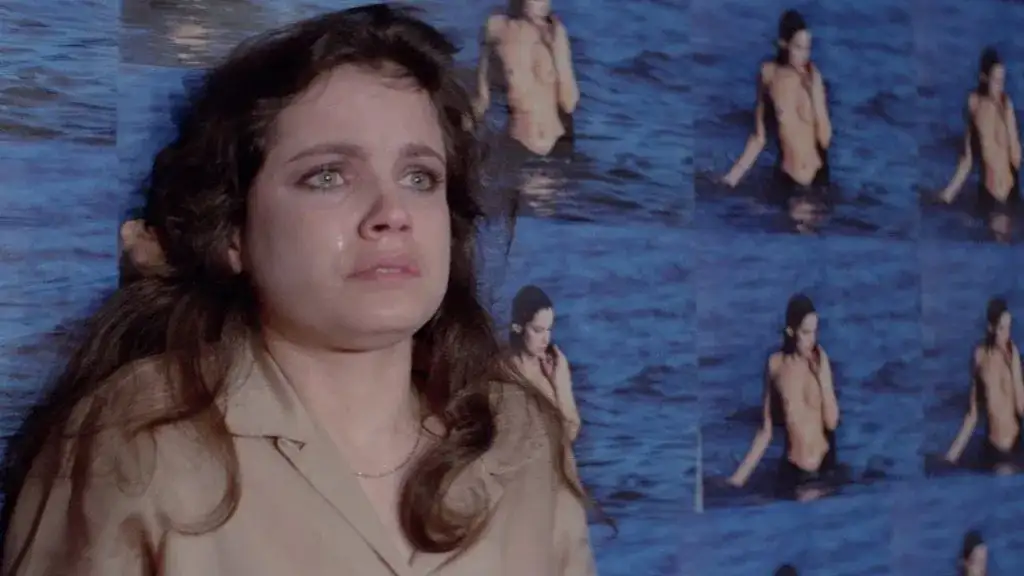
This film’s American title, The Day After Halloween, intrigued me as a fan of Halloween-set horror.
From the IMDB description of this film, I wasn’t expecting very much. It reads: “A naive hairdresser is spurred by her vivacious friend into becoming a nude model, but soon discovers that everyone she knows wants a piece of her.”
Although the poster promised more of a slasher horror, the logline sounded like a dated morality lecture. But I decided to give it a go, despite some misgivings.
The opening minutes gripped me with some truly arresting visuals, as firefighters with flashlights venture through thick smoke into a burnt-out building to find a charred corpse. And, over the opening credits, crime scene investigators collect evidence, including a camera and topless photographs of a woman.
We then, in flashback, are introduced to Angela (Sigrid Thorton) as, flustered, she races down a Melbourne street before arriving late to her hairdressing job. There, she’s berated by her queer-coded male boss for looking “like the dog’s dinner.”
However, downtrodden Angela perks up with the arrival of her glamorous customer/friend Madeline (Chantal Contouri). Who thinks that she can do better than this poorly paid wage-slave gig, and keeps pushing her to meet with her photographer friend Linsey (Hugh Keays-Byrne).
Madeline has apparently been attempting to convince her to try out modeling for some time. But Angela is hesitant. Among her many hang-ups is that she’s “flat-chested”. To which Madeleine replies (in one of the film’s only truly witty and funny lines), “Oh sugar, tits went out with Jayne Mansfield.”
Madeline won’t take no for an answer, and announces to Angela’s boss that she’s quitting. Throwing an aggressive homophobic slur his way for good measure.
From this point on, the film fulfills my initial impression: it turns into a tiresome cautionary tale with some questionable moral messaging. And it is anything but subtle.
For example, an unbelievably on-the-nose song plays during the nude photo shoot: it literally has the lyrics: “Angela, have you gone too far this time?”, “Now that it’s done, no turning back!”
What horror there is in this film falls completely flat and feels like an afterthought: the picture started life as a script called Centrefold. And the ‘suspense’ scenes come across as hastily pasted in to cash in on the recent success of John Carpenter’s Halloween.
Some of them are downright laughable, including an obvious The Godfather homage/rip-off you can see coming a mile away. And a half-hearted jump scare involving a bird.
Also, director Simon Wincer clearly thought that a pastel-pink Mr Whippy ice cream van that blasts the melody of “Greensleeves”, the main source of Angela’s terror, would be scary. It isn’t!
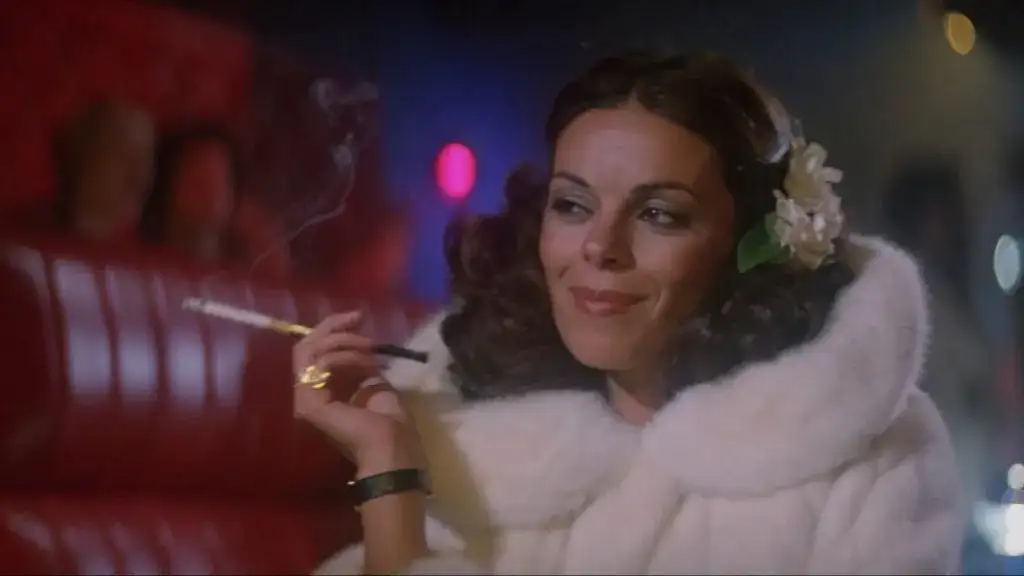
Saying all that, the film is made watchable by some truly surreal set dressing, and there are some genuinely interesting shots. Including one where a predatory man carving a beef roast appears to be slicing down Angela’s face. The fiery climax set up at the beginning of the film is also quite satisfying.
It’s also redeemed somewhat by some convincing acting. Mad Max: Fury Road Immortan Joe actor Keays-Byrne pretty much steals the film in his few scenes as the deeply eccentric photographer Linsey. His obsession with his art and goblin-like expressions of glee are genuinely entertaining.
Thorton does her best and is a likeable presence, although the script does her character no favors after certain developments late in the film. The same goes for her apparent BFF. While Contouri does a mostly entertaining spin on the femme fatale, the filmmakers decide to throw a twist into Madeline’s intentions that plays into dangerous stereotypes.
Patrick got away with being a potential Carrie cash-in because it was at least subtle in its imitation and actually had an interesting story of its own to tell. This film is blatant in its piggybacking off of Halloween, as the American title has nothing to do with the film: it takes place during the Australian winter, so it’s not even set in November!
The fact that it has no less than three alternative titles (Snapshot for Australian release and One More Minute and The Day After Halloween for international) betrays its identity crisis as a casting couch cautionary tale hiding inside a supposed slasher horror package.
According to IMDB, “Reportedly, the script for this movie [at least the first draft] was written in just ten days.” And yup, it shows.
Score: 5/10
Did I miss any of your favorite dark 70s “Ozploitation” films? Let me know on Instagram! And stay tuned for my list of the best “Ozploitation” horror/thrillers from the 80s!
Where to Watch Dishonorable Mention: Snapshot (1979)
Discover where Dishonorable Mention: Snapshot (1979) is available to stream, rent or buy across different platforms and countries.