
Where to Watch Blue Film
Discover where Blue Film is available to stream, rent or buy across different platforms and countries.
Why I took it off the list:
The trailer for this queer thriller/drama piqued my interest when it dropped a few months ago, promising a tense exploration of taboo issues. So when it hit streaming, I was first in line to check it out.
Review of Blue Film (2025)
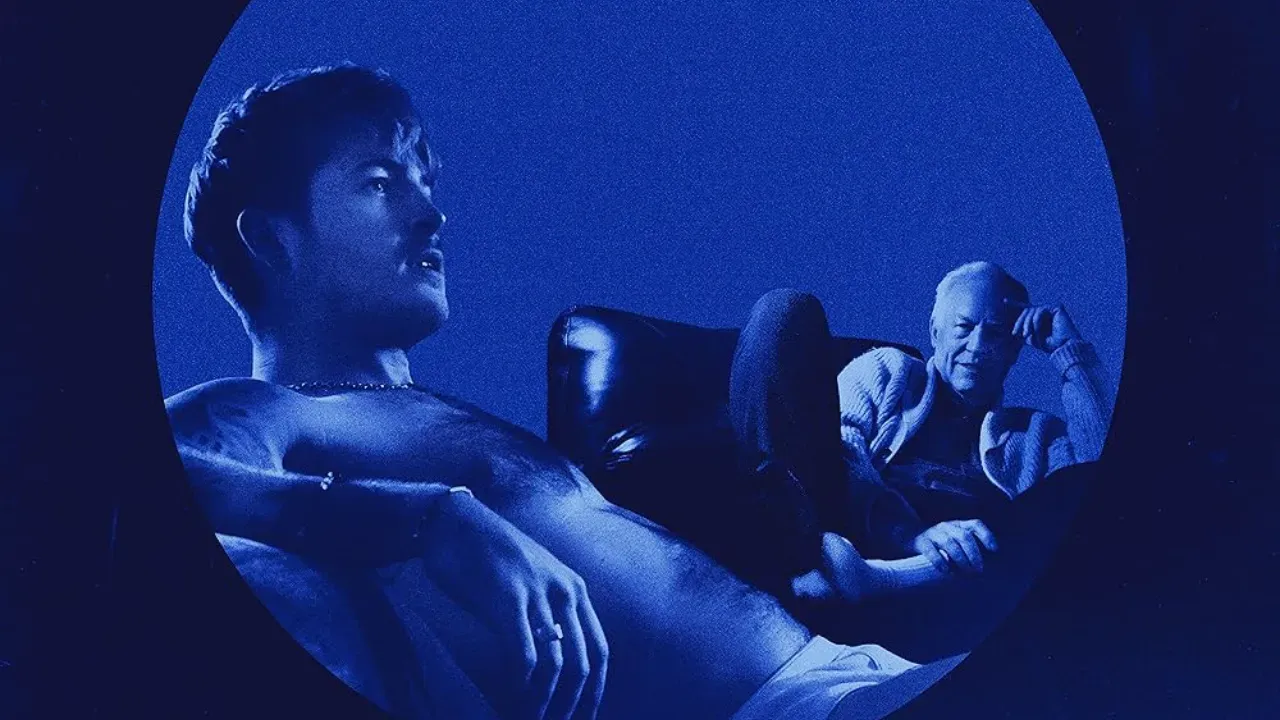
Blue Film is far from a comfortable watch. In fact, it’s probably one of the most uncomfortable films you’ll ever see.
There is no gore, and very little violence, although the threat of it hangs over the whole movie. And the entire film is essentially an extended conversation between two men.
But this conversation goes to dark places that few filmmakers nowadays would be willing to traverse. Indeed, although the film is highly in-tune with the digital age, Blue Film in many ways feels like a throwback to an era when movies like Tarnation (2003) and The Heart Is Deceitful Above All Things (2004) dared to excavate the impact of childhood trauma.
The most obvious point of reference is Gregg Araki’s Mysterious Skin, but this goes even further in exploring troubling questions by pairing a potential victim with a potential abuser.
And the frank and in-depth discussion of issues considered extremely taboo (usually only attempted in dark or broad comedy) will be a put-off to many. As will the intervals of not-especially graphic but implied prolonged sex acts interspersed throughout Blue Film.
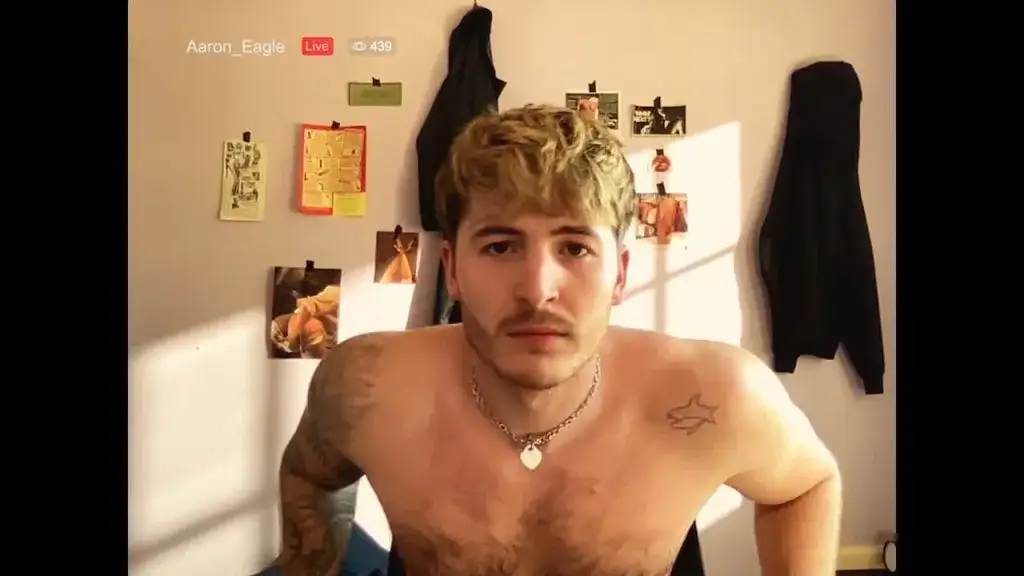
The first thing we see in the movie is an attractive man, all muscles, tattoos, dyed blonde hair, and fashionable facial fuzz, sitting down in his underwear to address his webcam directly. This is confident-bordering-on-arrogant camboy ‘Aaron Eagle’, who commands his adoring legions of “faggots” to send him coin before he’ll even consider revealing any more.
After insulting his fanbase with plenty more uses of that derogatory term, he casually mentions that he’ll soon be offline. As one “faggot” is paying him an insane amount of money for an in-person, all-night session.
The credits then roll over VHS-style home movies of a small blond child innocently playing, in fact vintage clips of the film’s writer/director himself, as he was understandably wary of using anyone else in this context. And then ‘Aaron’ arrives at the Airbnb of his client, an elderly man hiding his face behind a balaclava.
‘Aaron’ is let in and invited to get comfortable, which he interprets as stripping off to his briefs. His host notes that he seems to like being naked, to which the younger man retorts: “You would too, if you had a body like mine”.
‘Aaron’ is quick to notice that a camera has been set up in front of him, which he assumes is to capture his body. But his host has something different in mind: he wants to capture Aaron’s soul.
He begins to ask ‘Aaron’ probing questions about his life. But when he asks about the ‘Diablo’ tattoo he has over his eyebrow, Aaron decides this shit is getting too personal and isn’t worth the money.
His host tries to get him to stay, insisting he knows him, but ‘Aaron’, enraged, shouts “You don’t even know my real name.” That’s when his host says, “I do”, and declares, “Alex McConnell.”
‘Aaron’ is freaked out and insists the older man take off his balaclava, before snatching it away. And he is shocked by the reveal of the man’s identity.
Exceptional Script and Actors
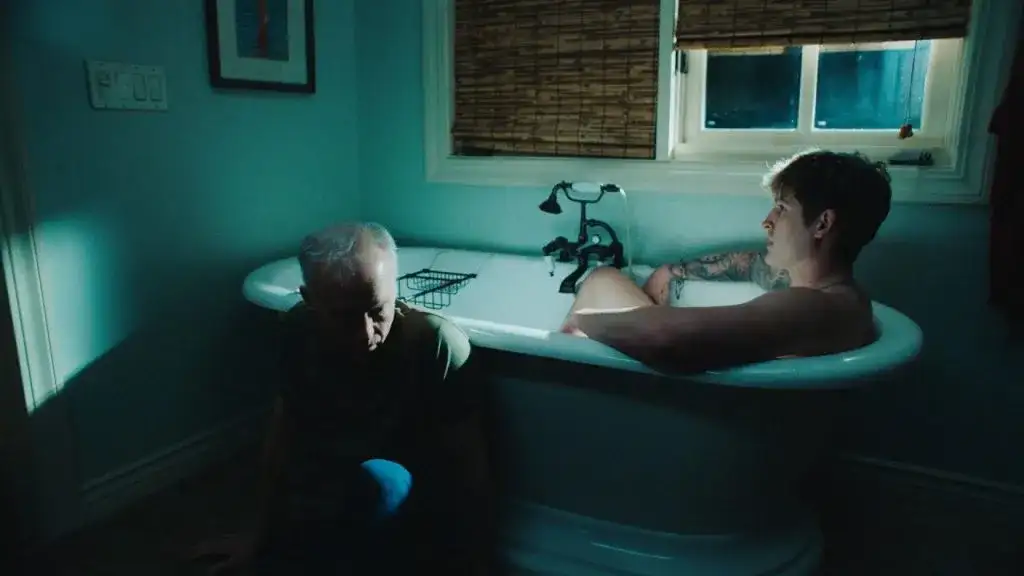
That Hank is revealed to be someone from Alex’s past isn’t too much of a surprise, otherwise the film would be a lot less compelling. And the trailer (please don’t watch it before the film – gives way too much away!) makes it explicit.
And it’s not hard to guess that Hank has pedophilic tendencies, although this is spelled out soon into the film’s runtime when Alex remembers hearing stories about him. And Hank admits his obsession with Alex started a long time ago.
What is surprising is the delicate unravelling of the two men’s constructed identities that ensues, as the power dynamic shifts between them with each new revelation.
Despite his insistence otherwise, it’s clear that Alex is not okay. As the night goes on and Hank probes deeper, he increases the use of the substances he uses to numb himself (beer, cigarettes, weed.)
And while he is initially reticent to act on his desires, Hank eventually gets Alex to agree to a deeply disturbing sexual role play scenario. Which requires Alex to be stripped bare, both physically and emotionally. And eventually pushes him to the film’s sole act of (physical) violence.
Alex is deeply disgusted by Hank, but he’s also curious: why is he the way he is? Was he born with his predilection? And Hank also has the same questions about Alex’s extreme sexual behavior.
As it turns out, there are no easy answers, though the two men attempt to provide some. Although Alex gives a story that sounds way too similar to one of the most well-known cinematic depictions of sexual trauma to be true – and so it proves.
Alex does eventually reveal the real reasons for his self-hatred and sexual acting out – and they are (seemingly) resolved in a surprisingly moving final intimate encounter between the two men. And when the morning comes, both men are seemingly in a much more peaceful place.
I cannot give enough praise to Elliot Tuttle’s screenplay for this film. It’s largely set in one location and hinges on the gradual opening-up of two men, but it remains thought-provoking and riveting to the very end.
And equal praise goes to the two actors, Kieron Moore and Reed Birney (who was also so great in the almost equally uncomfortable school shooting drama Mass). These are two deeply disturbed characters, but the actors somehow make them sympathetic.
With such uncomfortable subject matter, it’s no wonder that few rushed out to theaters to see Blue Film, with the film only making a paltry $31,000 at the US box office. But it’s interesting that, at the time of writing, the film was the most popular streaming title listed on Rotten Tomatoes.
So it seems that people are willing to expose themselves to the deep meditation on the nature of sexuality that this film dares to traverse. Just not in public.
Final Score: 8/10