
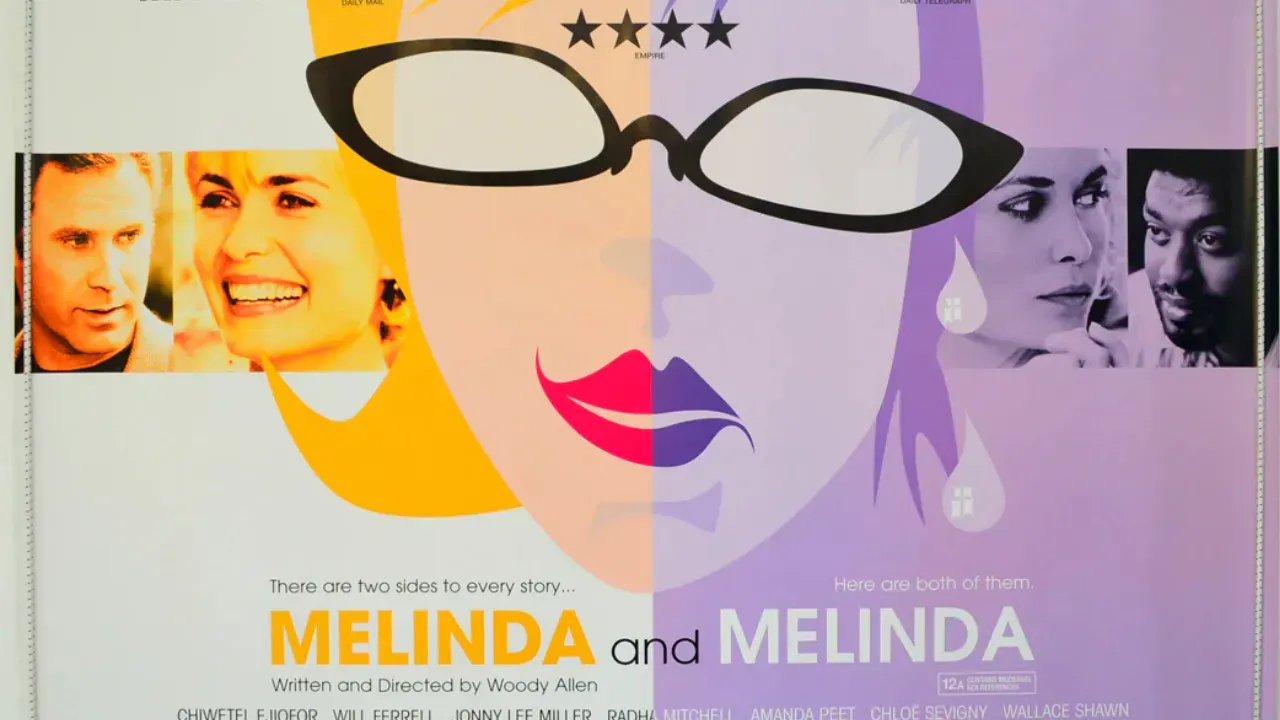
Where to Watch Melinda and Melinda
Discover where Melinda and Melinda is available to stream, rent or buy across different platforms and countries.
We're sorry, no streams available for Melinda and Melinda.
Why I took it off the list:
A phrase that keeps popping into my head recently is “Life can either be a comedy or a tragedy, it just depends on how you look at it.”
And it’s a line that’s (roughly) from this film, which I think I first saw when I was 14 or 15, having persuaded a friend who was also into film to make the (long) trip to the nearest cinema to see.
I think it was my first Woody Allen film actually, but his name didn’t mean anything to me at the time. The big draw for me was the leading lady, Radha Mitchell, who I was sort of obsessed with in my early teens thanks to her bad-ass but vulnerable performance as an Ellen Ripley-type in Pitch Black (2000).
And that wise line is a motto that I think I really took to heart. That, warts and all, life was a smoother ride if you just didn’t take everything very seriously.
So, despite some dips, I mostly laughed at my imperfections, clumsy and impulsive mess that I can be (one of my friends, the fablously witty Bianca, coined the phrase ‘Classic Garry’ to declare with joy whenever I had a mishap or misadventure.)
However, over time I think I forgot this, and for dark period all I could see was the bad, my faux pas and difficulties became more embarrassing and severe, and I became increasingly fearful, anxious, and depressed.
But now I’m starting to come out of a bad depression and see light and joy (and yes, even, humor) in the world again, that phrase is something that I keep reminding myself of whenever I start to feel even the slightest slip into despair.
So I decided to revisit Melinda and Melinda, over 20 (dear god, really?) years after the first and only time I’d seen it, and see if it stood the test of time.
Review of Melinda and Melinda (2004)
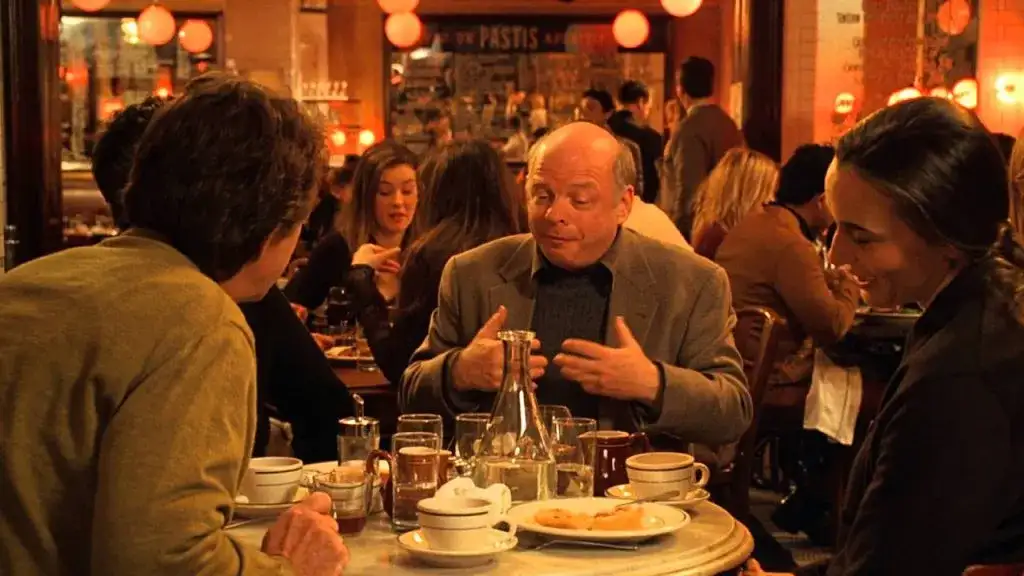
Melinda and Melinda opens on a rainy New York street outside a classy bistro at night, before cutting inside to find four intellectuals busy discussing the merits of comedy vs. tragedy.
The argument is between two playwrights, one (Wallace Shawn) who specializes in comedic work that has earned him commercial success, the other a tragedian (Larry Pine) whose acclaimed plays go underseen.
In order to settle the dispute, one of their companions tells them the beginnings of a story heard second-hand: in the middle of a dinner party where one of the hosts is trying to impress one of the guests, a woman unexpectedly shows up with a problem.
After a fade where the storyteller is implied to have laid out all the details, Shawn’s character declares that the material is perfect for a romantic comedy. However, Pine’s Max disagagrees.
What we then see play out is how each writer would envision the story: In the tragedy Melinda (Mitchell) shows up at the apartment of her old friend Laurel (Cloe Sevingy) down-and-out, looking worse for wear, and needing a place to stay. Laurel’s embittered husband Lee (Jonny Lee Miller), who is trying to impress a theater director, is not happy about the unexpected disruption.
In the comedy, couple Hobie (Will Ferrell) and Susan (Amanda Peet) are hosting a dinner party in the hopes that one of their guests, a rich real-estate investor, will give in and fork over 2 million to fund film-director Susan’s new movie, worringly titled The Castration Sonata.
Things are interrupted when downstairs neighbour Melinda (also Mitchell, although glowing and with a more becoming hairdo) rings the bell, announcing she’s just taken 28 sleeping pills (whether this was intentional or not is never made clear, but this appararent suicide attempt is nevertheless played for laughs).
In both versions, once the immediate problem is solved, the guests and/or hosts settle down to get to know Melinda a little better. The tragedy version waits for the dinner guests to clear out before she confides in Laurel how bad her life has gotten, while her comedic counterpart has no problem explaining her love troubles in front of a full room.
Another plot point used in both versions is that the couple try to set Melinda up with an acquaintance to get her out of her stupor. In the comedy version, Hobie has taken a bit of a shine to Melinda and tries to sabotage her date with the arrogant Greg (Josh Brolin).
In the tragedy version, Melinda is bored with her intended suitor and instead sparks with concert pianist Ellis Moonsong (Chiwetel Ejiofor). Although Laurel cautions her that the last time she ditched a more secure prospect and fell for a charming artist, things didn’t end up so well for her.
There are similarities in both stories; both of the husbands are aspiring actors angling for a big role, and both versions of Melinda betrayed her rich doctor husband and had an affair with a dashing Italian photographer called John San Guiliano, who eventually grew bored and left her for another woman.
But there are also differences that make it clear that this is not the same story we’re seeing being played out: Ferrell is perfectly happy to land a gig as the voice for an animated toothpaste in an ad, while Miller shuns commercial work and remains intent to make it as a ‘serious actor’.
Meanwhile, childless comedy Melinda only cheated because her husband was sleeping with his secretary and really suffered no apparent consequences, while tragedy Melinda did it because she was bored with her spouse (though not her two young children), and had much more to lose (and did).
Strong Supporting Cast – Except for Ferrell
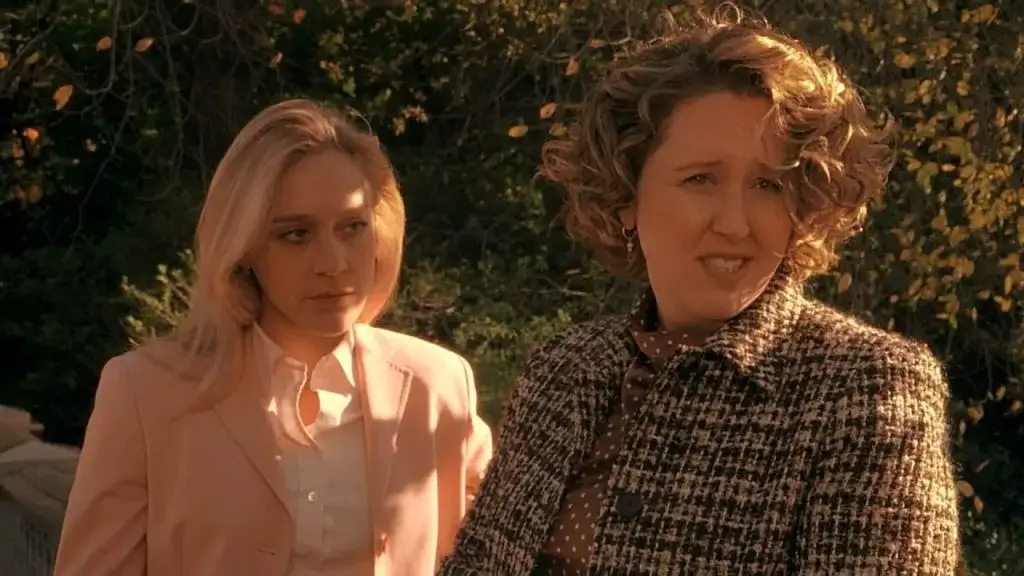
As can be expected from an Allen film, and love him for his films or hate him for his personal life, the writer/director has attracted an excellent cast to fill out even the minor supporting roles.
Shawn is reliably entertaining as the outspoken comedy playwright (though it’s a shame he gets so little screentime aside from the opening and closing scenes aside from a couple of interjections.)
And in the dramatic story, Sevingy really gets to shine as the vividly-drawn, conflicted Laurel, showing signs of the confident, mature actress she was becoming after a string of ingénue roles. Brooke Smith (The Silence of the Lambs) steals all her scenes as the blunt Cassie, another confidant of Melinda’s. Ejiofor is also effective as the sauve Ellis, but sadly gets little screentime to flesh the character out.
But casting Ferrell seems like a mistake. His schtick is so overbearing and loud that it drowns out eveyone else in the comedy sections. This includes Mitchell, who gets reduced to a quirky Manic Pixie Dream Girl stereotype and the object of Hobie’s affections. She only really gets one scene to give her some depth, an admittedly lovely interlude where she recounts meeting a guy while playing a piano in a street.
It doesn’t help that Allen is clearly more interested in Hobie than Melinda in the comedy, and that Ferrell is essentially playing one in a long line of neurotic Allen analogs.
Perhaps the film would feel far more satisfying if all the actors, not just Mitchell, were present in both of the stories. I mean, I’m sure Sevingy, Miller, and Ejiofor would all be perfectly capable of comedy. Heck, casting Ejiofor as Hobie would probably have made the whole thing more interesting.
But Allen is no idiot. He knew, just as Peet’s character does in the film, that casting actors that have little commercial success in a leading part is not benefical (Mitchell’s biggest previous role aside from Pitch Black was probably a supporting part in the Johnny Depp/Kate Winslet vehicle Finding Neverland, and her name didn’t even make the poster).
And it was years before Ejiofor would be Oscar-nominated for his brilliant work in 12 Years a Slave or join the MCU in Doctor Strange. So having him as the male lead for an artsy drama wouldn’t attract much of an audience. While signing up the guy who’d just had two massive hits in Old School and Elf for a bawdy comedy would.
Another actor I generally can’t stand in comedic roles (though he was great in dark drama Foxcatcher), Steve Carell, pops up, although his part is thankfully brief (this was presumably shot before Carell broke out as dim-witted weatherman Brick Tamland in Anchorman (2024) and really blew up the following year in The 40-Year-Old Virgin and The Office.)
Saying this, he’s seemingly the only person in the comedy segments who realize that the title character of the film is being sidelined, asking “Well, what does Melinda think of all this?” A question we don’t really get any satisfying answer for.
Mitchell is Excellent in the Dramatic Portions

At one point in a dramatic segment Melinda says of some music, “It’s great, although I find the more turbulent parts a little scary.” The opposite is true here: the more turbulent parts are where the real gold of the film lies.
Although she’d already demonstrated her formidable dramatic chops in her breakout film High Art (1998) and the harrowing miscarriage drama Everything Put Together (2000), Mitchell is a revelation as the more burdened version of Melinda. And Allen gives her some really meaty and impactful monologues to convey her desperation and despair.
Ironically, really the one thing we do learn about comedy Melinda is her career, she’s an art historian and has managed to get a job at a prestigious gallery. While tragedy Melinda’s occupation, if she has one, is left vague. She floats the idea of becoming an interior designer like her mother at one point in the film, but this seems like another pipe dream destined to never come true, and gives more insight into the chaotic and self-destructive nature of this version’s personality.
Both segments of the film climax with somebody attempting to jump out a window after learning they’ve been scorned by a lover. In the comedic section, the focus is on Ferrell as he scrambles to stop a thinly sketched hook-up (Vinessa Shaw) from doing the deed.
In the drama, the focus is squarely on Melinda’s agonized face as, learning of a painful betrayal, she has to be restrained while Laurel sadly comes to the conclusion that “she is one of those people who will always need help.”
It’s a complete mystery why Mitchell never really broke out as an A-list actress after this role, and sort of fell into a pattern of being cast in thankless wife sideroles, whether in the likes of indies like Big Sur (2013) or blockbuster franchises like Olympus Has Fallen (2013)and London Has Fallen (2016).
Either that, or the lead in generally poorly recieved horror movies such as Sacrifice (2016), Dreamkatcher (2020), and Devil’s Workshop (2022), although she was reportedly very entertaining in the latter.
Although nothing has come out publicly (Mitchell is known for being very guarded about her life off-camera), I have the horrible feeling that something #MeToo-esque happened to her and she was unjustly, like Ashley Judd or Mira Sorvino, put on some kind of blacklist.
Mostly because her Silent Hill (2006) director Christophe Gans supposedly said he wanted an all-female cast for that film because “I like to fuck the American bimbo.” Gross. And her streak of landing meaty roles, whether in leading or supporting parts, seemingly dried up after that.
Thankfully, her career now seems to be on the up once again, as she’s playing the bad-ass-sounding lead role of Vodoo Child (excellent name!) in the fantastic-looking action film Seven Snipers (2026) opposite Tim Roth and True Blood heart-throb Ryan Kwanten. Who knows, maybe she just had to get a better agent.
Final score: 6/10