
Where to Watch Joe
Discover where Joe is available to stream, rent or buy across different platforms and countries.
Why I took it off the list:
I decided to dig even further back into Susan Sarandon’s filmography than I did with my previous review, Light Sleeper (1992).
And reading her biography on her IMDB page, I was impressed to learn that she landed her first movie role with no previous film acting experience (aside from a 1968 film called The Next Oasis “which was unfinished and abandoned”).
Intriguingly, she was cast “after the 1968 Democratic convention and there was a casting call for a film with several roles for the kind of young people who had disrupted the convention”.
Both her and her then husband auditioned, but it was Susan who landed a role (sorry, Chris, but at least you later got to do the speaking voice for the iconic Jack Skellington in the absolute classic Tim Burton’s The Nightmare Before Christmas!).
So, I decided to go back to the very beginning and see how Susan fared in her debut. Reading the plot synopsis for Joe, I was further intrigued and sought it out.
So, let’s dig in!
Review of Joe (1970)
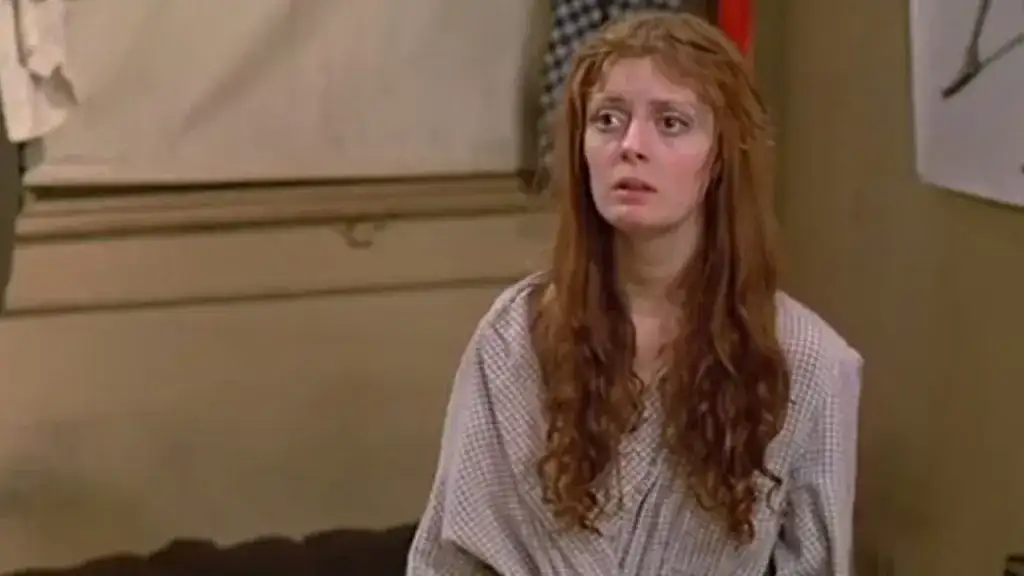
At the very beginning of the film, it seems as though Melissa Compton (Sarandon) is going to be the protagonist of Joe. It’s her we see weaving her way through city streets and peering in at storefront displays through the creative presentation of the title of the film.
She arrives home to her cramped apartment, greets her boyfriend Frank, and promptly strips completely nude to get into the bath (I mean, damn, Sarandon was brave and admirable from the start).
The 2 chat, but Melissa is dismayed to learn that Frank, an aspiring artist, is still dealing drugs, and even more disconcerted when he starts shooting up heroin.
He tells her he just needs to do one more deal to get the money to move to a better place and heads out to push drugs, telling a distraught Melissa to take some pep pills to brighten her mood.
So she does, but takes maybe one too many, as she’s soon having an epic meltdown in a drugstore where she smears lipstick all over her face. After manically giggling and sweeping a row of items off a shelf, she has to be restrained by the clerk as the owner calls an ambulance.
Then at the hospital, one of several interesting shifts in perspectives occurs as Melissa’s worried, wealthy parents arrive to check on their daughter. They assure her she’ll be moved to a more upscale recovery center and then come home to stay with them.
The parents then go to Melissa’s building to get her things. Disgusted by the state of the place, her mother Mary Lou (K Callen) refuses to enter the apartment, leaving her husband Bill (Dennis Patrick) to do the job.
As he’s stomping on syringes, ripping down photos of Frank and Melissa together, and gathering clothes, the boyfriend arrives home. In a fit of rage, Bill attacks Frank and accidentally kills him, and then in a panic scatters pills around the body and steals a bag of dope to make it look like a drug deal gone wrong.
Shaken by his actions, Bill heads to a bar to down some scotch, where he meets the loudmouth bigot Joe Curran (Peter Boyle). This jaded factory worker thinks that ‘niggers’, queers, and drug-taking hippies are ruining the country, and expresses his desire to kill one of the latter.
To his own surprise, Bill blurts out that he just has. Joe thinks this is a hilarious joke, but when he goes home and sees the evening news about a murdered drug dealer, he thinks twice.
He tracks Bill down and tells him he knows what he did, and though the prosperous ad executive fears blackmail, Joe assures him that he has nothing but admiration for his actions and did the country a favor.
Bill is somewhat assuaged by Joe’s words, and agrees to meet him for a drink. The 2 men then strike up an unlikely friendship, and Bill begins to come around to Joe’s worldview.
When Melissa goes AWOL, Joe volunteers to accompany Bill on his search for his daughter through her usual stomping grounds, insisting on bringing a couple of guns from his large collection “just to scare the hippies a bit”. And as you can imagine, things don’t end well.
Thought-Provoking and Well-Performed
Sarandon’s freak-out in the pharmacy and the murder keep Joe watchable in the first act of the movie, but it’s not until 27 minutes in with the introduction of the titular character that the film really kicks into gear.
Joe originally had a much lengthier runtime, with a long opening sequence dedicated to Melissa’s interactions with her parents. However, “The filmmakers realized they struck gold with the scene-stealing performance of Peter Boyle (Joe) and cut much of the beginning”.
Indeed, once Joe is introduced spitting his venomous diatribe in the bar, and we see things from his perspective, it’s hard not to be both utterly fascinated and repulsed by Boyle’s performance.
In both his contemptuous treatment of his good-natured but naive wife Joan (Audrey Caire) and his gleeful egging-on of Bill to join him further on a dark path, Boyle excels in embodying a bona-fide psychopath.
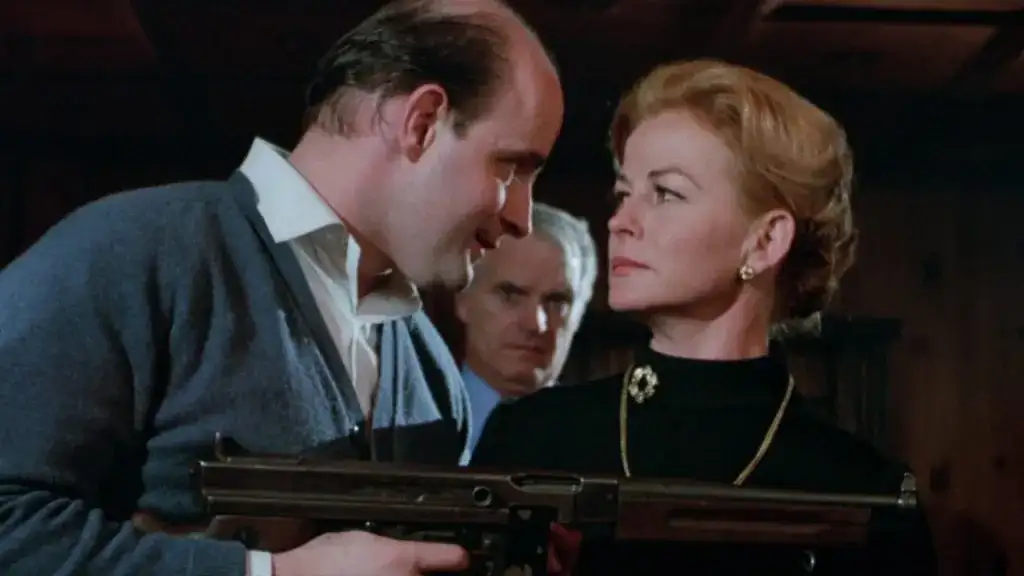
In a stand-out sequence in the film, the Comptons visit the Curran’s humble abode for a meal. An awkward dining table scene ensues, during which Joe says comparatively little but manages to scare both Mary Lou and us the audience with pretty much just his sinister facial expressions alone.
Patrick also excels in portraying a man initially wracked with guilt to a self-righteous avenger, while both Callen and Caire bring character and flair to what could have been one-note wife side roles.
After her initial prominent screen time, Sarandon sadly gets sidelined later in the narrative, but as noted makes a strong impression in her debut. Even if her needy, desperate, somewhat thin character is the complete opposite of the vividly-drawn, willful Ann in Light Sleeper.
Joe is also a fascinating portrait of a time and a place where the culture clash in the US was at its most fraught yet, and the older generation was frustrated and even angered by the perceived sense of entitlement of the young.
This is perhaps best illustrated by a chilling scene in which Joe inspects his collection of guns and then lovingly takes apart and cleans one of them, while an anthem that seems tailored to his malaise and hatred plays on the soundtrack.
Final score: 8/10
Joe (1970): Worth Watching?
Yes, Joe is a fascinating exploration of an unlikely, toxic relationship between 2 very different men, bolstered by strong performances from all involved, particularly Boyle.