
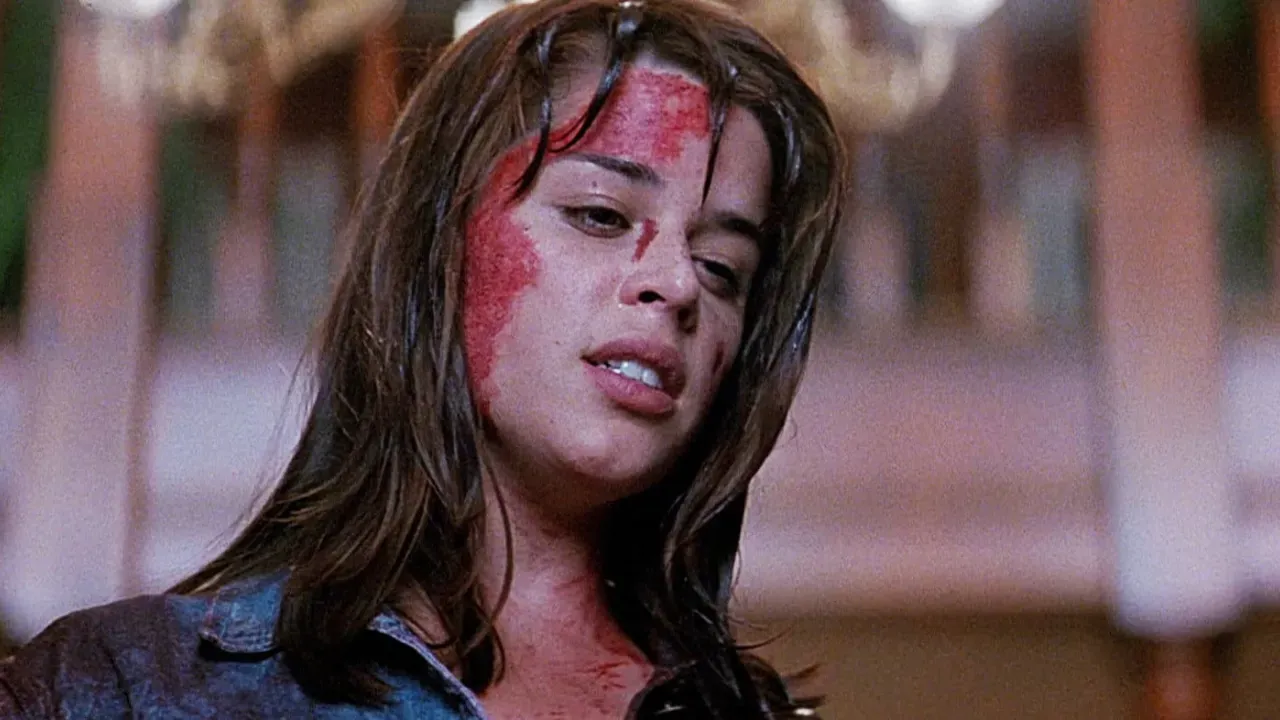
Where to Watch How Sidney Prescott Saved My Life
Discover where How Sidney Prescott Saved My Life is available to stream, rent or buy across different platforms and countries.
Warning: Spoilers for the first 6 Scream films! I also describe a personal traumatic experience which some might find triggering. This is also a long article (sorry about that, I guess I had a lot to say!).
This is something a bit different from my usual reviews and lists. The other day, I was excited to see a poster for the seventh (!!) installment of the Scream franchise.
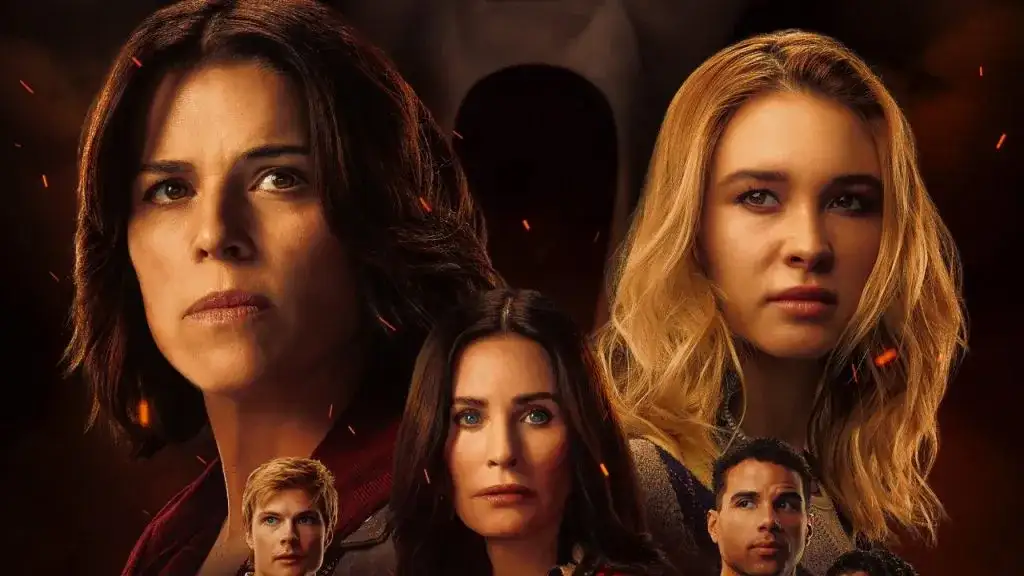
And, among a sea of floating heads of new and returning characters, what a joy it was to see that Sidney Prescott loomed largest, Neve Campbell looking as exquisite as always (seriously, talk about aging gracefully).
After sitting out the sixth installment due to a pay dispute, she was back!
As a gay man, I love Sidney and strongly identify with her (more on that later). Unlike her, I’ve never been chased by a murderous man with a knife wearing a mask (by a potentially murderous man with strong fists in regular clothes, yes. Again, more on that later.) But, as with most people, I’ve been through my fair share of challenging and traumatic experiences.
Campbell has admitted how appreciative she is of the character’s iconic status among fans. And how moved she is to hear that Sidney’s strength helped them cope through real-life trauma.
Redditor red_herring13, echoing my own feelings, says,“Sidney has always been such a huge role model for me (in a fucked up way). I saw Scream when I was ten. I suffered from a lot of mental illness/trauma and I was able to grow up alongside the franchise and see Sid overcoming all of this horrible shit. She motivated me to not give up. She was my hero.”
So, the lack of Campbell’s presence in Scream 6 was sorely felt for many, even if it gave fellow long-running co-star Courtney Cox a more prominent part to play as a mentor to the younger characters (and, after five movies, surprisingly, the iconic bitch/hero reporter Gale Weathers’ first ever call with Ghostface!).
The fresh faces in the cast of Scream (2022) were engaging and their performances enjoyable — maybe most of all Jasmin Savoy Brown as Mindy, the new generation’s resident horror film geek.
But what really got the most cheers from the audience was the moment when Dewey (David Arquette) makes a call and none other than Sidney Prescott answers on the other side.
She’s in running gear, pushing a stroller. And she looks fab for a woman who has been targeted by no less than four different sets of killers and shot or stabbed multiple times.
Dewey explains that there’s a new Ghostface stalking Woodsboro, and warns Sid not to come back, no matter what she sees or hears. She tells him she has no intention of returning to their hometown. Understandable, given how her most recent ordeal, in 2011’s Scream 4, went down there.
Worried that the killer might come after her, Dewey asks her if she has a gun. Sidney then replies, in perhaps her most iconic line so far and one that shows how much wisdom and awareness this character has gained, “I’m Sidney fucking Prescott, of course I have a gun”.
Bringing Sidney Back Was the Best Outcome
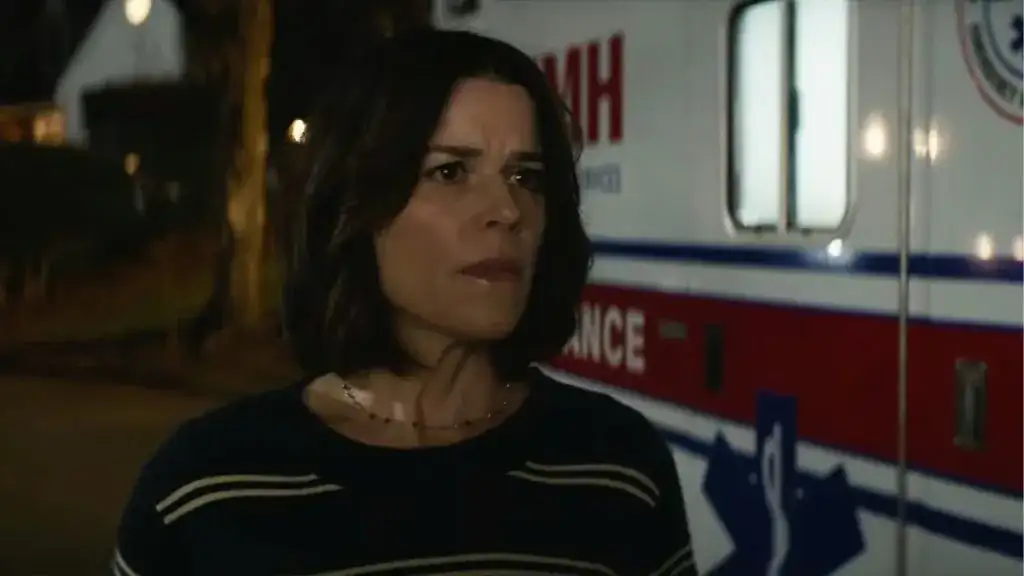
Although it was lamentable that Campbell chose to skip the 6th installment, it was completely understandable. As she put it, “I honestly don’t believe that if I were a man and had done five installments of a huge blockbuster franchise over 25 years, that the number that I was offered would be the number that would be offered to a man.”
Despite Campbell’s absence, Scream 6 was a massive hit. So a further installment was all but a guarantee, and soon Christopher Landon (Happy Death Day) was hired to direct Scream 7 from a script by the writers of the two previous movies.
But then some troubling events took place in the development of the film. Firstly and disgracefully, Melissa Barerra was fired from the leading role due to her pro-Palestine social media posts that production company Spyglass deemed antisemitic.
That same month, co-lead Jenna Ortega also pulled out of Scream 7, with reports at the time citing scheduling conflicts with her smash-hit Netflix show Wednesday. However, Ortega later clarified that her exit was in solidarity with Barrera, who she has described as a “sister for life.”
Soon after, Landon revealed that he had also decided to leave the project, calling it a “dream job that turned into a nightmare,” and sharing that he had received death threats over his perceived role in Barrera’s firing.
So it seemed that, with no clear direction forward, the Scream franchise was dead in the water. Then something surprising happened.
Pay dispute seemingly resolved, Neve Campbell announced on Instagram that she was returning to the franchise, saying, “I’m very happy and proud to say I’ve been asked, in the most respectful way, to bring Sidney back to the screen and I couldn’t be more thrilled!!!”
But maybe the biggest news Campbell disclosed was that Kevin Williamson would be directing.
Williamson had only directed one feature film before, the less-than-well-received Teaching Mrs. Tingle (1999). But as a writer, Williamson had not only crafted the screenplay for the original Scream but also arguably the best sequels, 2 and 4.
Campbell was obviously excited about this development, stating, “This was his baby, and it’s his brilliant mind that dreamt up this world.” And indeed, if Scream 7 was “going to follow Sidney,” who better to do justice to the long-suffering character’s story than the man who first conjured her into being?
Sidney’s Evolution in the First Film
When the first movie was in development, the studio wanted a big name for the lead role of Sidney Prescott, and so Drew Barrymore was cast. However, “she later requested the smaller role of Casey Becker,” to which the filmmakers agreed, “believing it would be impactful to kill off their most well-known actor during Scream‘s opening and convince audiences that no character was safe.”
The hunt was on for a new Sidney, and although talent like Reese Witherspoon and Brittany Murphy were considered, Campbell, then best known for TV show Party of Five won the role, thanks to her qualities of “athleticism from her dancing background with a combination of strength and vulnerability.”
According to the Scream Wikipedia page, which is full of fascinating trivia about the first movie, “Campbell said she was drawn to Sidney because she was ‘a fantastic character for any kind of movie’ who transitions from “tormented, traumatized, insecure young woman to overwhelmingly empowered and strong’”.
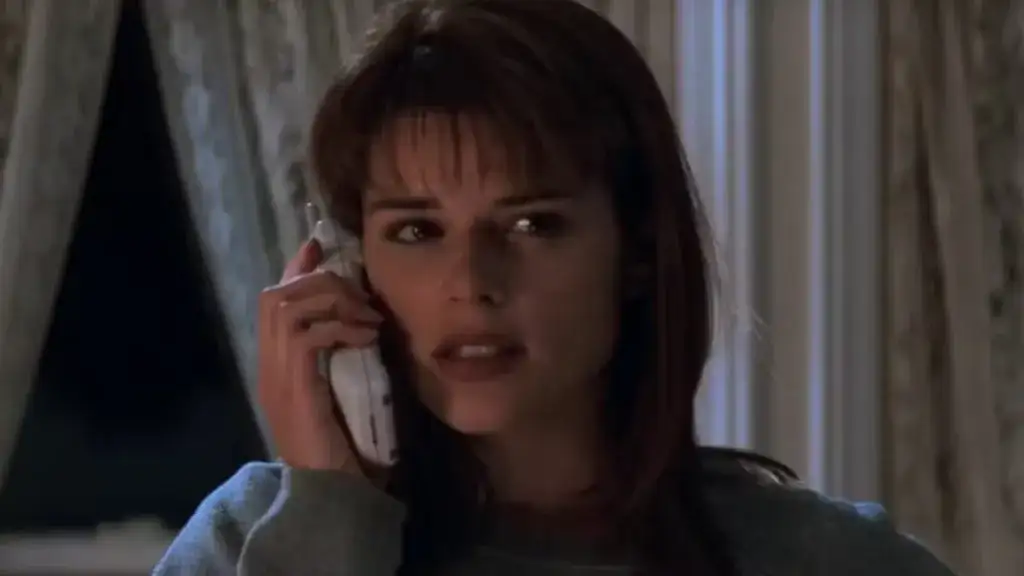
After Barrymore bites in the dust in the still-shocking opening sequence, we’re immediately introduced to Sidney studiously typing away on her computer and dressed in a girlish nightgown.
Her innocence and naïveté are further enforced when her boyfriend Billy sneaks through her window and wants to do some “over the clothes stuff.” She agrees, but stops him when he starts getting too “hot and heavy.”
So far, and like almost every other ‘final girl‘ before her — from Laurie Strode in Halloween to Nancy Thompson in Elm Street — so virtuous and virginal. Up to this point, everyone knew that a teen girl in a horror flick who gave into sexual mores was in for a bloody comeuppance, perhaps most notoriously in the Friday the 13th films.
In Scream, Sidney does eventually have sex with Billy. However, instead of getting punished for it, she’s the one who (fatally) punishes him. And not for sex, but, well, for being a maniac.
There’s another quality to Sidney that made her stand out from previous final girls that had come before her. When the film begins, it’s been a year since her mother Maureen was found raped and murdered. And despite most people around her barely tiptoeing around the subject, Sidney appears to be mostly well-adjusted and living a normal life. She’s already shown resilience amid trauma.
Like most of the teens we meet in Woodsboro, particularly genre enthusiast Randy, Sidney has a keen awareness of horror movies, but dislikes them, saying, “They’re all the same. Some stupid killer stalking some big-breasted girl who can’t act, who’s always running up the stairs when she should be going out the front door. It’s insulting.”
When Ghostface starts targeting her with menacing phone calls revolving around horror movie trivia, she refuses to play his game. She realizes she’s in a real-life horror movie, and when the first attack comes, she shows remarkable instincts and strength. Admittedly, she does run up the stairs, but only because she’s (smartly) chained the front door shut.
Fast-forward to the climax of the movie, when the killers are revealed, and Sidney has become the hostage of two psychopaths explaining their motives and methodology. But after a distraction from Gale, Sidney gets the upper hand, turning the tables on Billy and Stu and eventually defeating them.
When Sidney, Gale, and Randy are standing over Billy’s body, the latter warns them that “this is the moment when the supposedly dead killer comes back to life for one last scare.” And so he does, before Sidney quickly shoots him square in the forehead.
And then she utters another of her many iconic lines across the franchise: “Not in my movie.”
Why Sidney Prescott Endures
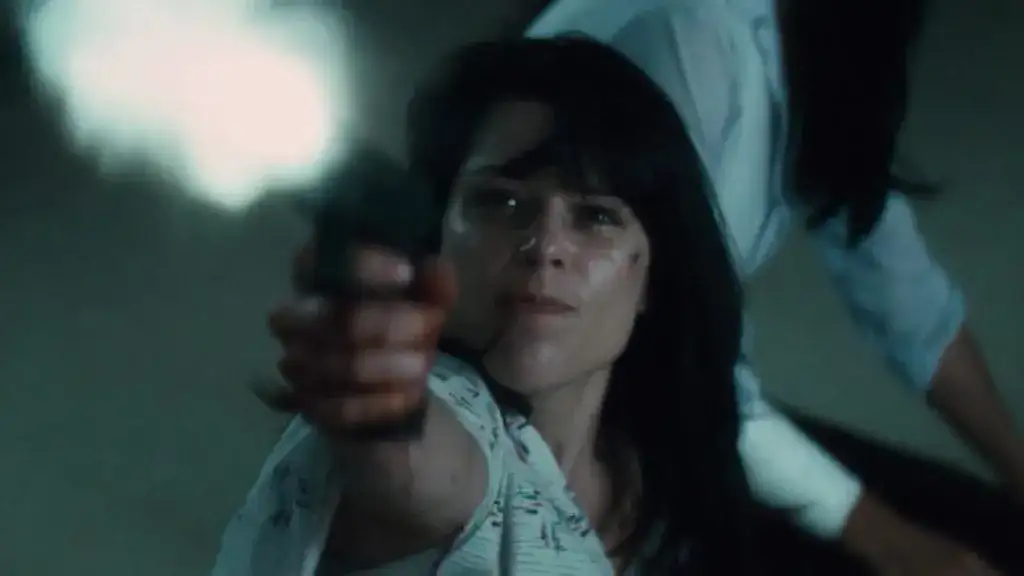
If Sidney emerged as a heroine worth rooting for by the end of the first movie, her admirable resilience only increased in the sequels. At the beginning of Scream 2, we see she’s attending college, pursuing drama, and, most cheer-worthy, calling out asshole pranksters who think it’s funny to phone her up with a Ghostface voice-changer.
In Scream 3, not written by Williamson but rather the not-so-reliable Ehren Kruger, the character gets mostly short shrift because of Campbell’s then-busy schedule. When she does appear, she is mostly paralyzed by apparent phone calls from and hallucinations of her dead mother.
But one fascinating development of Sidney’s character in Scream 3 deserves some admiration. Despite living under an alias as a recluse in a heavily alarmed remote cottage, and the traumatic calls from the previous killers, she now works as a crisis hotline counselor, trying to help other women in peril.
By the end of that film, she’s turned the alarms off, leaves the gate to her property open, and is reunited with her friends as they settle down to watch a movie (whether it’s a horror or not is left up to the imagination of the viewer).
By the time Scream 4 finally came around 11 years later, Sidney has truly blossomed. She’s written a self-help book called Out of Darkness, and we see her confidently striding into a bookstore in Woodsboro (accompanied by The Sounds’ awesome ‘Something to Die For’) to read an extract to an expectant audience.
Through dialogue, we get some key insights into where Sidney’s mindset is now: “If I was a victim for too long, it was up to me to reinvent myself,” and “I began to believe that was all I was, a victim, and that was unacceptable to me.”
Needless to say, another killer strikes while Sidney is in town, and the ordeal she goes through is maybe her most brutal yet. What’s more, the betrayal she faces in this movie is perhaps the most personal. I won’t go into spoilers, but if you haven’t seen Scream 4, do so — it might be my favorite of all the movies!
However, Sidney once again comes out on top and vanquishes the person who is attempting to take her crown as the franchise’s final girl. Even if she suffers more injuries than in all the previous movies put together (at one point, the killer, exasperated that she just won’t die, exclaims, “Who are you? Michael fucking Myers?!”).
By the time Scream 6 came around, everyone involved with this franchise knew that Sidney can’t, couldn’t be allowed to, die. Despite the fact she’s absent in that film, Gale assures curious characters that she’s in a safe place and that she “deserves a happy ending.”
My Sidney Moment
The most harrowing event I’ve yet lived through, almost like a more nightmarish verion of After Hours, happened on Christmas Eve. To my shame and regret, I put myself in a dangerous situation. I had stopped taking my meds days before and had, for some unknowable reason, decided the way I was going to feel better was by drinking. So I hit more than a few bars in the city.
Around 11pm, considerably worse for wear, I suddenly realized that I was incredibly late for Christmas celebrations at my friend’s family home out of town. And that I had lost my phone, and with that my only way of letting them know. So I decided to take a taxi, whatever the cost.
I flagged down a cab, told the driver where I needed to go, and he told me he’d take me, if I could pay for it. I said I could, and soon we were on our way.
During the trip, the driver didn’t seem to be in a talkative mood, so we largely sat in silence. But the radio was playing, and all of a sudden, the sound of Kim Carnes’ ‘Bette Davis Eyes’ filled the cab.
Delighted by the DJ’s song selection, a favorite of mine, I told the driver this tune was a classic. He unconvincingly mumbled something in agreement.
Maybe emboldened by the copious amounts of alcohol I had consumed, I began to sing along as I watched darkened industrial complexes whizz by, lit only by the occasional blink of a red light on towering chimneys. Little did I know I would soon be fighting for my life among these urban hellscapes.
Before I knew it, we had arrived in the town where my friend’s family lived. The driver impatiently asked for the exact address. I didn’t know it. All I could remember was that it was in the mountains, next to an entrance to the natural park with a big fountain.
So I asked the driver to cruise around the more hilly streets until I spotted the house. He refused, saying that he’d got me to the town I had asked to go to, and that I was going to pay the fare, get out, and walk around until I found where I was looking for.
That’s when I realized that not only had my phone been lost (or stolen) but that my wallet had disappeared too. With trepidation, I told the driver I had no way to pay the fare, but if we could just find my friend’s place, they would gladly reimburse him.
That’s when the mood in the car changed. The driver got incredibly angry, sped off, and told me he was taking me to the police. I begged him to just try to find my friend’s place, but again, he refused.
After a few moments of speeding down narrow streets, he looked at me in the rearview mirror. In a sinister tone, he told me, “No, I’m not taking you to the police. I know exactly where I’m going to take you.”
I realized that this was not a good or rational person I was dealing with. I became scared, and considered opening the door and jumping out. But he was going too fast, and there didn’t seem to be any red lights or stop signs coming to my rescue.
We got on a highway out of the town, and he started driving faster, all the time shouting abuse at me. “You fucking drunk.” “Trying to cheat me out of money, you bastard.” And most chillingly, “You’re going to get what’s coming to you.”
Gripping the car chair with white knuckles, I tried to reason with him. I even told him, yes, go with your original idea and take me to the police. They can find my friend’s house and get you your money. But he stayed silent.
After about 15 minutes of not knowing where the hell this maniac was taking me, we arrived at a disturbing destination: a deserted industrial park with no lit windows or living beings in sight, just a load of shuttered warehouses and a smattering of trucks. And no CCTV.
He stopped the car, got out, came around to the back door, opened it, dragged me out and threw me to the ground. He kicked me.
I turned and saw his face, screwed up with fury, eyes devoid of any emotion but anger, and his outstretched arms, about to grab me. That’s when I realized, like Sidney Prescott during her first phone call with the killer, that I was in a real-life horror movie.
To my own surprise, I acted with remarkable speed. I quickly scrambled backwards using my hands as he advanced on me and was able to get to my feet.
I just started running, the drizzle that had started to fall stinging my cheeks. I could hear his footsteps as he chased after me. I rounded the corner of a warehouse and saw a big truck on the other side of the street.
I dashed behind the truck and pressed myself up tight against it, hands outstretched, legs ready to run if he found me. I stayed frozen in that position for what seemed like hours, trembling with fear, occasionally peeking out to see if he was near. I saw the taxi drive back and forth a couple of times: he was looking for me. But, thankfully, he didn’t find me.
I had done what every sensible final girl in the horror films I had watched growing up had taught me, including Sidney, I had run, and I had hid. And it worked. Unlike some of them, fighting wasn’t really an option for me: the guy was much bigger than me, and I was in a bad state.
Once I was sure he had given up and gone, I emerged from my hiding place and surveyed my surroundings. This was now the early hours of Christmas Day and the industrial park was, understandably, all closed up, and there didn’t appear to be any truckers taking a nap in the vehicles.
So I started walking. And it started to rain more heavily. The industrial park seemed to stretch on for miles. But I kept struggling on, losing any sense of time, until I came upon a man servicing a car. He told me there was a bus stop just down the street.
I got to the stop, and when a bus bound for the city came, I stumbled on, soaking wet and trembling with nerves. I told the driver I thought I needed to get to a hospital but didn’t have money for fare due to the stolen wallet. He gave me a look of pity and waved me on.
I spent most of Christmas morning in an emergency room waiting hall and in interviews with first a nurse then a doctor, before I got some meds to help me calm down. They then saw to it that I got a train ticket that enabled me to get back to my friend’s town. To say they showed me an extraordinary act of kindness I will never forget is an understatement.
I eventually made it to my destination. After wandering around town for around 3 hours asking anyone around if they knew where a big fountain was, I was slipping into despair. I pled for someone in the sky or a universal force or a UFO or something to help me find my way.
Minutes later, I came over the crest of a hill. At the bottom of the hill was, unmistakably, my friend’s bright red car, and behind that, his family’s house. I think I said ‘Thank God’ more times than I took strides as, with my last bit of energy, I sprinted down that hill.
The gate was locked and there was no buzzer, and so I ended up climbing over the fence to get into the house’s garden, something that a guy passing by in a van gave me side-eye for. But at this point, I couldn’t care less if he called the police.
I weakly knocked on the door. My friends were alarmed but also glad to see me. As I’d arrived a day late, they assumed I wasn’t coming and had long since given up trying to reach me by phone or texting acquaintances to ask if they knew about my whereabouts.
I think I said something along the lines of “You don’t know what it cost for me to finally get here,” before I told them everything that had happened (or in the case of the skipping of meds and drinking, had done to myself). I started to cry and apologized if I had ruined their Christmas. They assured me I hadn’t and that the biggest gift they got was my safe arrival.
With a calm but firm voice, my friend’s mother told me there were two things that I had to immediately do to begin to start solving my problems; 1) that I had to take my medication as prescribed, and that 2) the drinking had to stop, and I should never touch a drop of alcohol again. The other messes could be untangled gradually.
I immediately and genuinely accepted these terms. And, just glad to be alive and in the company of people who wanted me to be well, spent the rest of Christmas Day relatively worry-free and in the expected overindulgence of food.
At night, however, when I closed my eyes to sleep, I saw the attack in the deserted industrial park as through the eyes of a non-existent onlooker.
I saw the driver pull me from the taxi and throw me to the ground. I saw him kick me, then lunge for me with his fists.
But then I saw myself scrambling away from him across the wet tarmac, get up, and run for my life. I saw myself survive.
I thought how lucky I was, that the driver could have done anything he wanted to me, and left me for dead in that place without a way to call for help. It wouldn’t be frequented in the next couple of days because of the holidays, and he’d probably have gotten away with it.
So I felt lucky, and then told myself it was over. And then I fell asleep.
Lessons

Just as Sidney Prescott has learned some valuable life lessons throughout her 5-film ordeal to date, I also gained pearls of wisdom on that Christmas Eve and since then, which in hope of helping others, I share below.
- If you need to be taking medication for anxiety and depression, take it. You go a bit loopy if you don’t.
- Don’t even consider drinking if you’re taking those pills. Whether you’re on or accidentally off them, things can turn bad.
- If you’re hailing a taxi on the street, make sure you either get the license plate or a look at the Driver’s ID. Because I was too wasted and unaware of any danger, I didn’t get any of this information. So when I tried to report the attack, the police told me the chances of tracking him were zilch.
- If you feel you need to take a taxi, consider using Uber or Cabify! At least then you can be tracked, and the driver held responsible if, heaven forbid, they turn out to be an amoral, violent psycho.
- If you, unlike me, haven’t lost your phone, send your live location to a friend, or maybe research local apps for location sharing and emergency calls.
There are probably other lessons to be learned from this incident. But I guess they will come to me, in time.
Since that night, people have told me they thought I was remarkably resilient in such a situation. But I just think that, despite my lack of sobriety, my gut instincts just kicked in, and I got a surge of adrenaline when I saw the fury in that man’s eyes. I guess like Sidney seeing that mask and knife in her first attack.
In the time since I got back on medication and have stayed sober, things have become easier and better each and every day, and hopefully I will continue to cultivate more resilience.
Sidney’s Role in my Survival
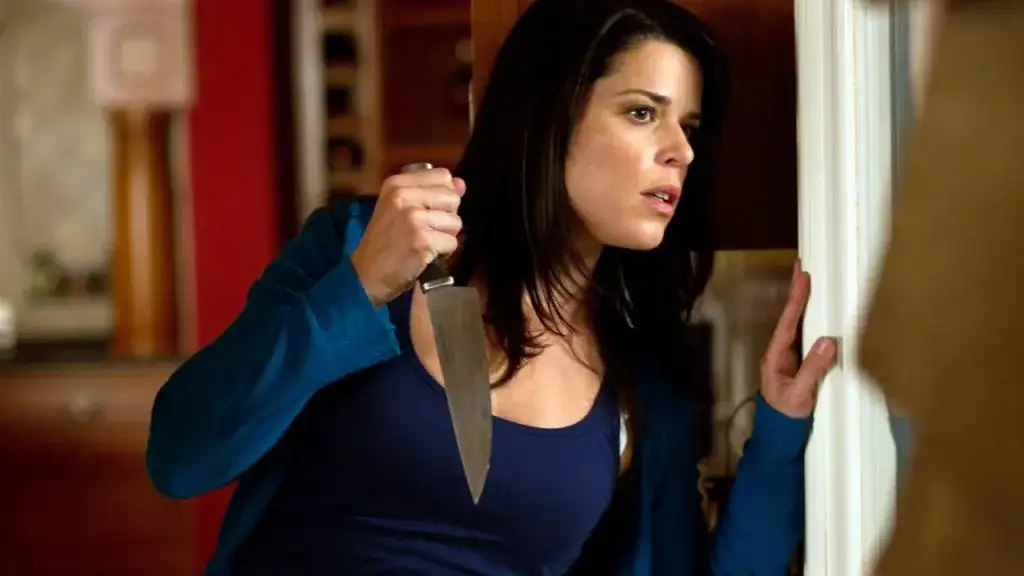
But, you’re asking, what about Sidney Prescott? Hasn’t she got sidelined a bit in this last chapter? Well, we started with Sidney, so we’re going to finish with her too.
When I saw that Scream 7 poster and Neve Campbell’s presence, I asked myself, “Why do I have such an appreciation for this character and a desire to see her triumph?”
In his excellent book Straight Jacket (which by the way, according to Elton John, “is an essential read for every gay person on the planet” and I agree), author Matthew Todd ponders the question of why queer people in particular gravitate towards strong, empowered women.
In the book, Todd mostly cites glamorous pop stars such as Lady Gaga, Madonna, Kylie Minogue, and Beyoncé as objects of admiration by gay men. But he also namechecks Dorothy from The Wizard of Oz and Roxy Hart from Chicago as characters who captivate queer audiences.
Both of these characters, like Sidney Prescott, overcome substantial challenges in order to secure a happy ending. Sidney’s just happen to be more immediately life-threatening, and so seeing her come out victorious every time is extra rewarding to people who have suffered traumatic experiences in their lives, as most queer people have.
Talking to author Ashley Cullins for her deep-dive book Your Favorite Scary Movie about his plans for the character in Scream 7, Williamson said, “She has been through so much trauma, that to give her anything less than a happy ending is mean. It’s just sacrilegious.”
And so it’s clear, that at this point in the franchise, no-one is watching a Scream movie to see beloved, long-running characters get killed (2022’s Scream made that mistake and people are still not over it), especially Sidney.
People are now watching to see how this incredibly resilient woman will triumph over evil. And the great thing about Sidney is that, despite all the betrayals and trauma, she hasn’t lost her vulnerability and empathy.
Unlike Laurie Strode in the last Halloween trilogy, she hasn’t become a battle-hardened, cynical loner. She has, understandably, developed heightened survival instincts, but she has retained her humanity. And I like to think, despite more than a few hard knocks, that I have too.
The last time we saw Sidney, at the end of Scream 2022, Barerra’s character asks her if she’s going to be alright. Sidney replies, “I’ll survive. I always do.” And so she should.
Who knows how long this franchise will go on, and if it does, if Sidney will be involved. But maybe there’s some kind of future, in 2056’s Scream 20, where we see an elderly Sidney die peacefully in her bed, surrounded by loved ones, knowing that she triumphed over the horror in her life and never stopped fighting for good.
In his book, Todd comes to an interesting conclusion, stating that the gay appeal of figures such as Sidney “isn’t because we know they had difficult lives. It’s because we sense in them the vulnerability and strength that we have too”
And, maybe sometimes, that transmission of resilience can seep into our consciousness and serve us in the real world, if a time ever arises when we need it.