
Where to Watch Brides
Discover where Brides is available to stream, rent or buy across different platforms and countries.
Why I took it off the list:
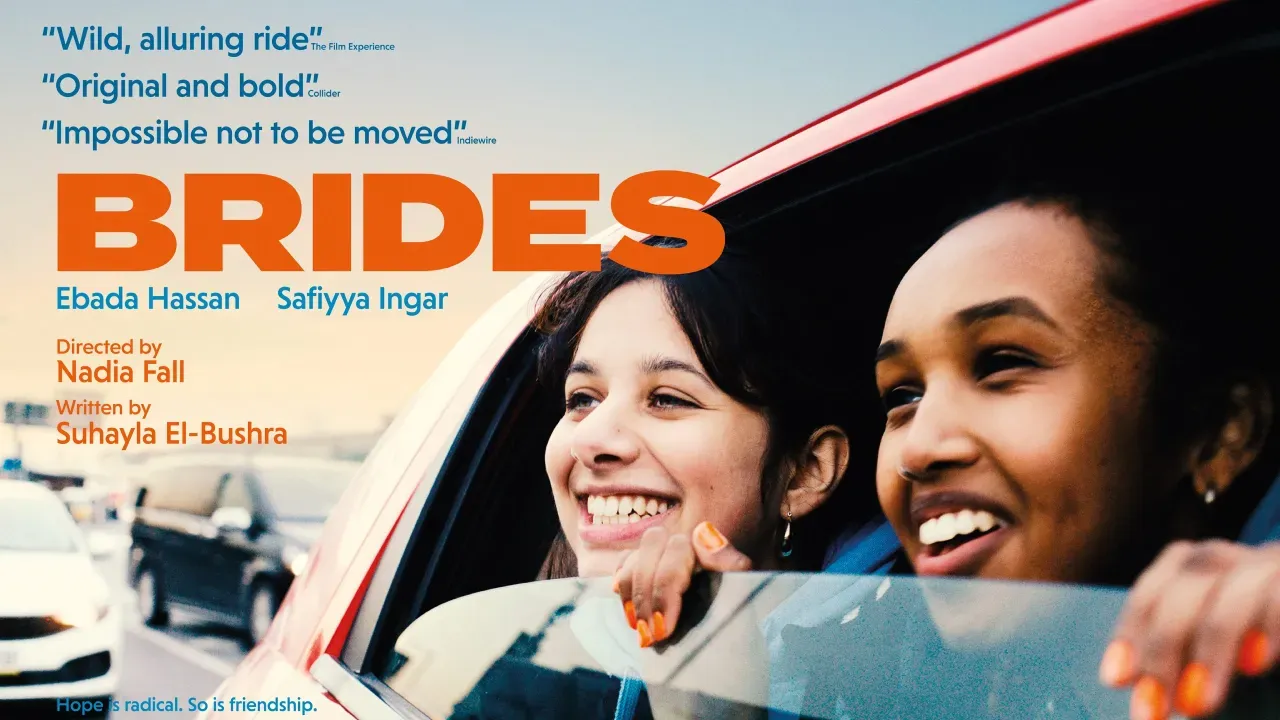
The poster for this British film caught my eye as it shows two girls leaning out of a car window in an euphoric state. I felt I needed to watch something feel-good as I continue to climb my way out of a long depression, and a comedic road-trip seemed appealing.
So I decided to read the logline of the film and was somewhat taken aback: Two teen Muslim girls decide to flee their homes in Britain to travel to Syria via Turkey to become IS brides.
I was perplexed and incredibly intrigued: how does such a joyous poster align with such heavy subject matter? I decided to watch it immediately to find out.
So, let’s dig in!
Review of Brides (2025)

Not to be confused with 2025’s awful-sounding Bride Hard (nominated this year for three Razzie awards, ouch) or Maggie Gyllenhaal’s excellent, punky, feminist take on Frankenstein The Bride!, Brides tackles a taboo issue with care and sensitivity.
The film begins with the scene above, as BFFs Doe (Ebada Hassan) and Muna (Safiyya Ingar), hands firmly entwined, blissfully swing back and forth in a playground. But after a title card informing us we’re in England in 2014, the swing is shown to be empty, a foreboding omen of what we’re about to experience.
Surprisingly, the next scene shows Doe carefully sneaking out of her house in the middle of the night, and soon the two girls are on a train bound for the airport. The playful Muna is busy cracking jokes, but they don’t do much to cheer up the clearly worried Doe.
But once they’ve nervously gone through airport security (reminding me how much I HATE that process) and get to the duty-free area, the two are giggling away, trying on mascara, and squirting perfume at each other.
At a café, they indulge in a shared chocolate sundae. Muna tells Doe to savor it, as they won’t be having any more such treats in a long time, before she mischievously initiates a game of snog, marry, kill.
Doe decides she’d marry Jamie Oliver, even though he’s not Muslim, reasoning that he works hard for his large family. Muna ponders whether he’d convert for Doe, before concluding that “he eats too much pork.”
The girls get on their flight and the casual banter continues, but Doe is noticeably unnerved when she checks her phone to find worried messages from her mother. Then, we get the first of many flashbacks that start to fill in the blanks as to how she came to make such a radical decision.
And through Muna’s voiceover, we get snippets of the reasoning behind and instructions for their journey from a girl on Instagram, Hanan, who has already made the same life-altering trip.
These include “Never travel alone”, “Act like a tourist”, “Always buy return tickets, it’s less suspicious”, and “Don’t call home till you reach the border, no matter how much it breaks your heart.”
But problems begin to arise as soon as they get to Istanbul Airport; their promised escort and onward tickets never materialize. So Doe decides they are going to get a bus to the border on their own, although Muna points out that Hanan said not to.
They manage to book a bus, but it’s not for a few hours, so the girls set out to explore Istanbul. But then another complication arises: Doe’s purse, containing her passport, the bus tickets, and all their money, is stolen.
A distraught Doe, who’s already been rattled during the day by flashes of good times spent with her loving mother, wonders, “Do you think this is Allah’s way of telling us to go home?” Muna then snarkily replies, “Well if he wanted us to go home, he could have at least left your passport.”
So begins a rather fraught odyssey through Turkey to reach the border, and while the girls are thankfully met with plenty of kindness from strangers, they are always on guard and more than willing to lie to keep the true motive of their journey a secret.
A Beautiful, Heartbreaking Portrait of Friendship
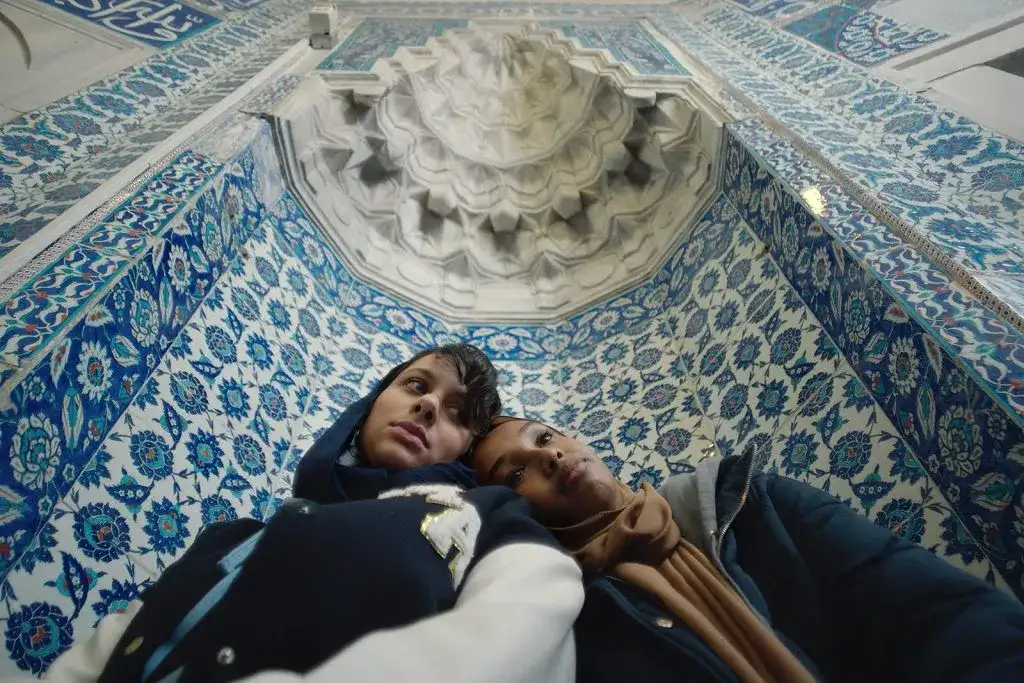
Much of the tension in the back half of the film comes from the fact that Doe is becoming increasingly uncertain of the choice she has made, while Muna remains unwavering in her belief that they are headed towards a better life.
Both of the girls are vividly drawn, very different personalities, and the acting is naturalistic and the performances endearing. While Ingar has the showier role as the brash, outspoken Muna, it’s Hassan, who has no prior on-screen acting experience, who gives the more nuanced, and quietly devastating, turn as the conflicted Doe.
Unlike the sensationalist coverage and scorn poured on Shamima Begum, the most obvious real-life inspiration for this story, the film shows a tremendous amount of empathy towards its characters, something that is perhaps its biggest strength.
The flashback structure, which can often be distracting, actually really works in the film’s favor, as the girls’ life in Britain, both the good and the ugly, is contrasted with their current predicament and we gain more insight into why they have made this decision.
On a related note, the editing in Brides is fantastic, most notably through montages of real-world horrors and chaotic events interspliced with the girls’ joyous frolicking. However, this messaging can at times be a bit too blunt, most notably in the film’s climax.
However, the film redeems itself somewhat in a coda that reminds us what this film has really been about: sketching out a portrait of an unshakable friendship forged by both shared trauma and mutual understanding, however misguided.
Final score: 8/10